

Participated as a Resource Person in the Farmer Field School (FFS) programme conducted at Thimmapur
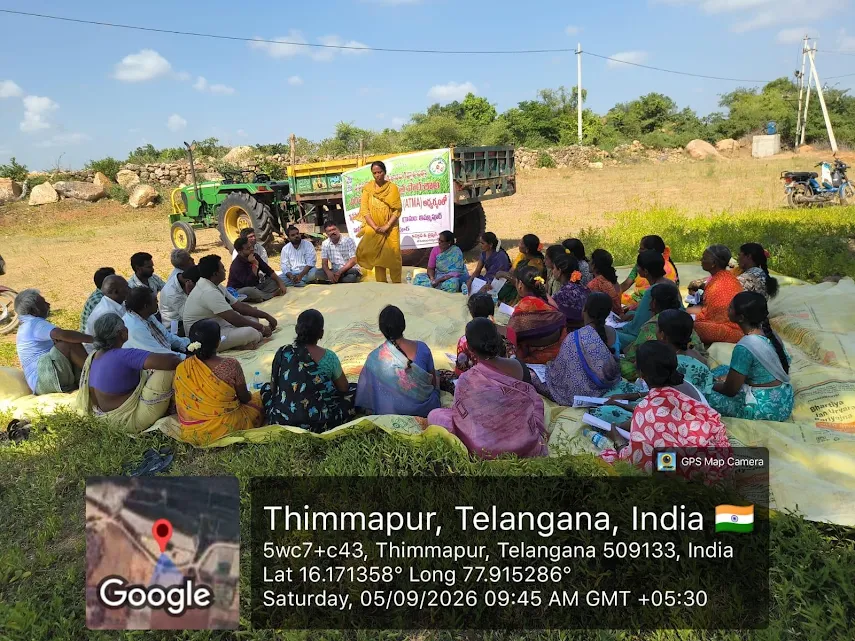
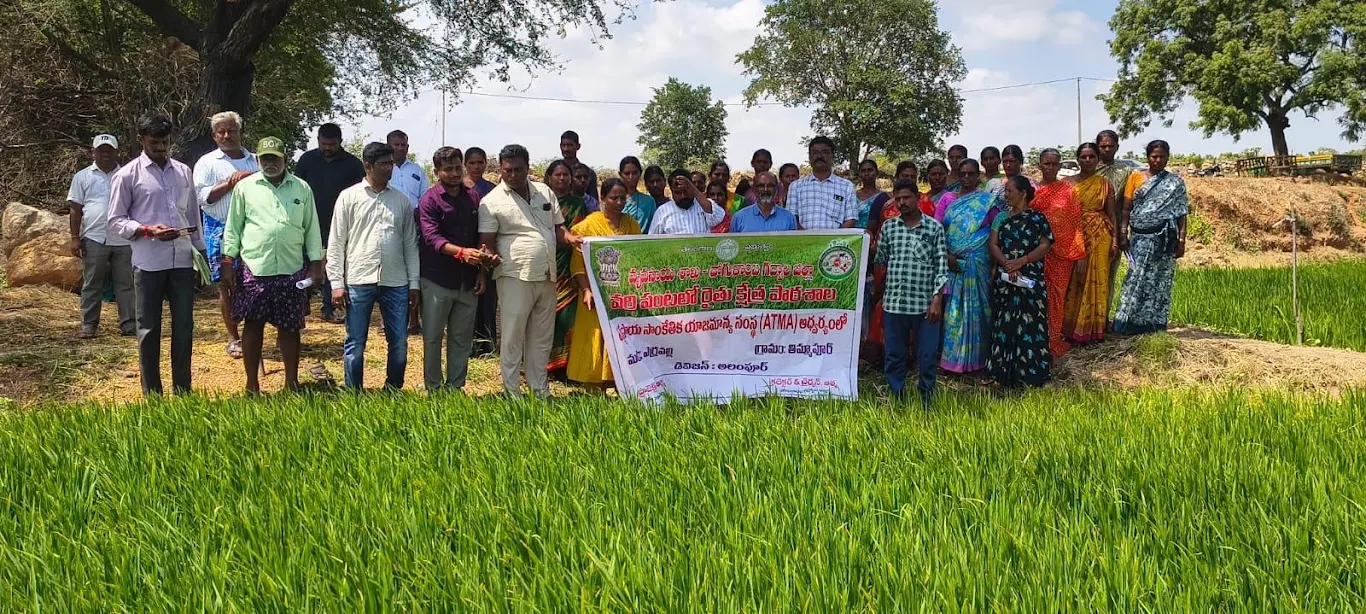
Dr. P. Archana, Coordinator, Telangana Rythu Vignana Kendra (TRVK), Jogulamba Gadwal, participated as a Resource Person in the Farmer Field School (FFS) programme conducted at Thimmapur village, Yerravalli Mandal, Jogulamba Gadwal District, on 05-09-2026. The programme was attended by Sri Veerappa, District Agriculture Officer (DAO), Jogulamba Gadwal; Assistant Director of Agriculture (ADA), Alampur Division; Mandal Agriculture Officer (MAO), Yerravalli; Agriculture Extension Officer (AEO), Thimmapur Cluster; and 35 farmers, comprising 25 women and 10 men.
During the technical session, Dr. P. Archana explained the identification of beneficial and harmful insects and other organisms in paddy ecosystems, their characteristic features, role and impact on crop growth and yield. Farmers were educated on beneficial organisms such as ladybird beetles, spiders, lacewings, dragonflies, damselflies, predatory bugs and parasitoids, which naturally suppress pest populations. The importance of conserving these natural enemies by avoiding unnecessary and indiscriminate pesticide applications was emphasized.
Major harmful pests of paddy, including stem borer, leaf folder, brown planthopper (BPH), white-backed planthopper (WBPH), gall midge and rice hispa, were discussed along with their identification and appropriate management measures. Farmers were advised to regularly monitor the crop and follow need-based pest management rather than calendar-based pesticide application. Proper plant population, balanced fertilization, avoidance of excessive nitrogen, appropriate water management and field sanitation were also emphasized.
The session focused on Integrated Pest Management (IPM), giving priority to cultural, mechanical, biological and need-based chemical control measures. Farmers were advised to use pheromone traps for monitoring stem borer activity, undertake regular field scouting and adopt control measures when pest incidence reaches the recommended economic threshold level.
For chemical control, farmers were advised to select pesticides based on the pest identified and apply them strictly according to the label-recommended dose. Commonly recommended options, subject to the registered crop-pest label recommendation, include chlorantraniliprole 18.5% SC @ 0.3 ml/L of water or flubendiamide 39.35% SC @ 0.2 ml/L for stem borer and leaf folder management. For planthoppers, emphasis was placed on avoiding excess nitrogen, proper water management and using only a registered insecticide at its label-recommended dose when chemical intervention is warranted. Indiscriminate pesticide mixtures and overdosing were strongly discouraged.
The importance of safe pesticide and herbicide application was explained. Farmers were advised to use appropriate protective clothing, gloves, footwear and face protection; avoid eating, drinking or smoking while handling pesticides; calibrate sprayers properly; observe the recommended waiting period before harvest; and dispose of empty containers safely. Herbicides should be selected according to the weed species and crop stage and applied only at the recommended dose and water volume.
Dr. P. Archana further emphasized judicious pesticide use, conservation of natural enemies and rotation of insecticides with different modes of action to reduce pesticide resistance. Farmers were encouraged to maintain regular field observations and record pest and natural-enemy populations as part of the FFS learning process.
Sri Veerappa, DAO, Jogulamba Gadwal, explained various organic and eco-friendly practices in paddy cultivation, including the use of farmyard manure, compost, green manuring, botanical preparations and other locally available organic inputs. He highlighted the importance of reducing unnecessary chemical inputs and promoting environmentally sustainable crop production.
The programme provided an interactive platform for farmers to identify and distinguish beneficial and harmful organisms in paddy fields and understand their practical importance in pest management. Farmers actively interacted with agricultural scientists and departmental officials and clarified field-level problems related to pest identification, pesticide selection, dosage, herbicide use and sustainable paddy production. The programme emphasized the principle: “Identify the pest, monitor the crop, conserve beneficial organisms and apply pesticides only when necessary and at the recommended dose.”