
Observation of Parthenium awareness day on the eve of 21 st Parthenium awareness week
21st Parthenium awareness week (16-22nd August, 2026) is conducted at ARS, Adilabad on 22.08.2026. All the Teaching and Non Teaching Staff members, Outsourcing staff, Casual labors (MTS) and Contract labours were participated in the programme.
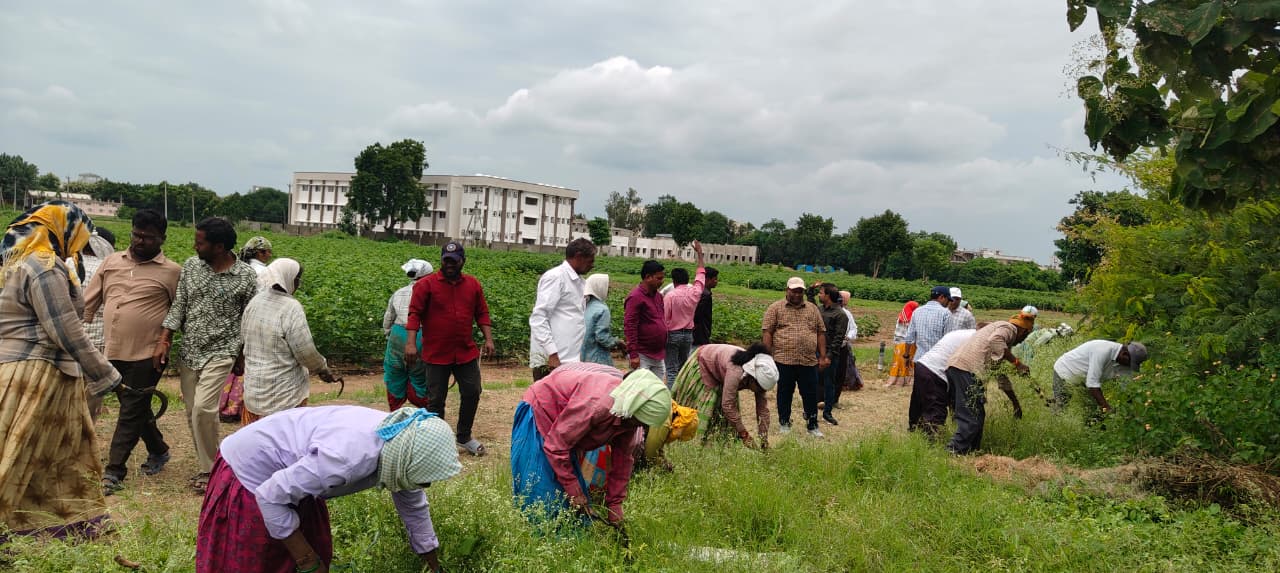
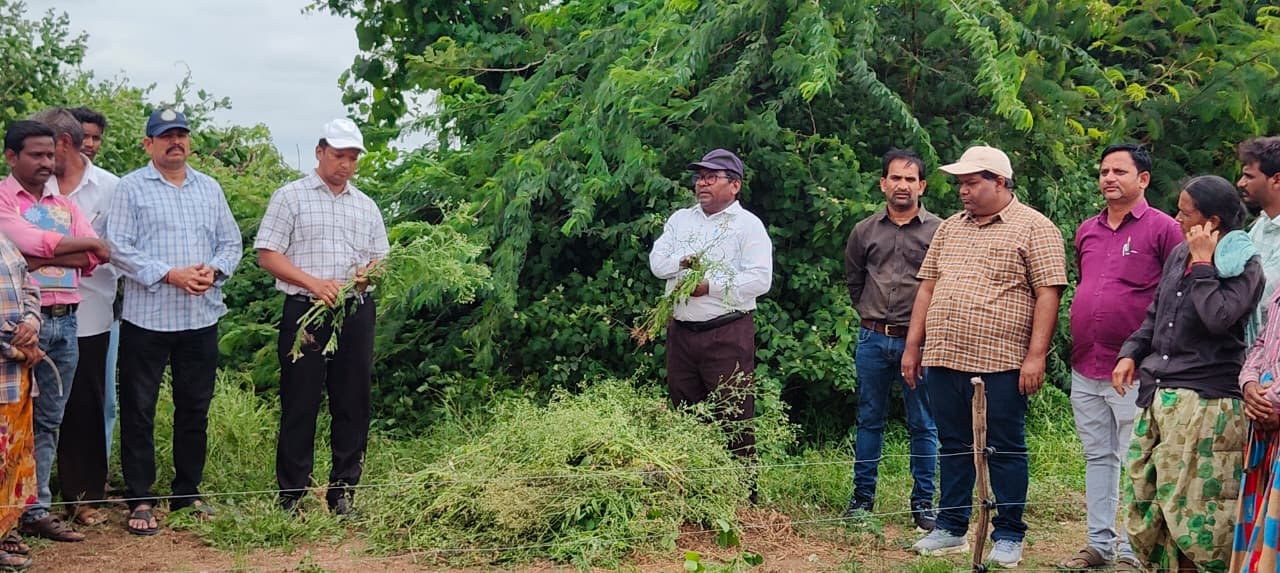
The programme started with the manual removal/cutting of well established Parthenium plants nearby research plots, bunds & Officer premises. Dr. Sreedhar Chauhan, Principal Scientist (Agro.) & Head; Dr. K. Rajashekar, Sr. Scientist (Ento.); Dr. D. Mohan Das, Scientist (Agro.) & Dr. M. Rajendar Reddy, Scientist (Pl. Br.) attended the Parthenium clearance event and addressed the gathering on significance this programme.
During the event speakers expressed about 21st Parthenium eradication week is an important nationwide programme led by the ICAR–Directorate of Weed Research (ICAR-DWR), Jabalpur, MP to create awareness and promote coordinated action against Parthenium hysterophorus, commonly called White cap (or) top, Congress grass, carrot weed or Gajar Ghaas. The 2026 programme emphasizes integrated management, public participation and timely control.
Finally, the speakers expressed why Parthenium eradication is important?
- In Agricultural: Parthenium is a highly aggressive invasive weed that competes with crops for water, nutrients, sunlight and space, thereby reducing crop productivity. It can invade agricultural fields, field bunds, wastelands and roadsides.
- In Human health: Contact with Parthenium and exposure to its pollen can cause skin allergies/dermatitis, respiratory problems and asthma in susceptible people. Therefore, controlling the weed is also a public-health measure.
- In Animal and livestock health: Parthenium can affect livestock by contaminating fodder and grazing areas and can contribute to health problems and reduced fodder availability.
- In Biodiversity and environment: The weed can suppress other vegetation and negatively affect native plants, biodiversity and ecosystem balance. Its rapid seed production makes continued management necessary.
- Prevention of seed production and spread: Removing Parthenium before flowering and seed setting is particularly important because it prevents the production and dispersal of large quantities of seed. Current SAUS/ICAR programmes specifically demonstrate timely uprooting and other integrated control measures.
At the end, timely removal of Parthenium weed from the surroundings is the social responsibility of people and attend on community basis.