

TRVK, MBNR- participated in a on Kisan mela at Mahabubnagar
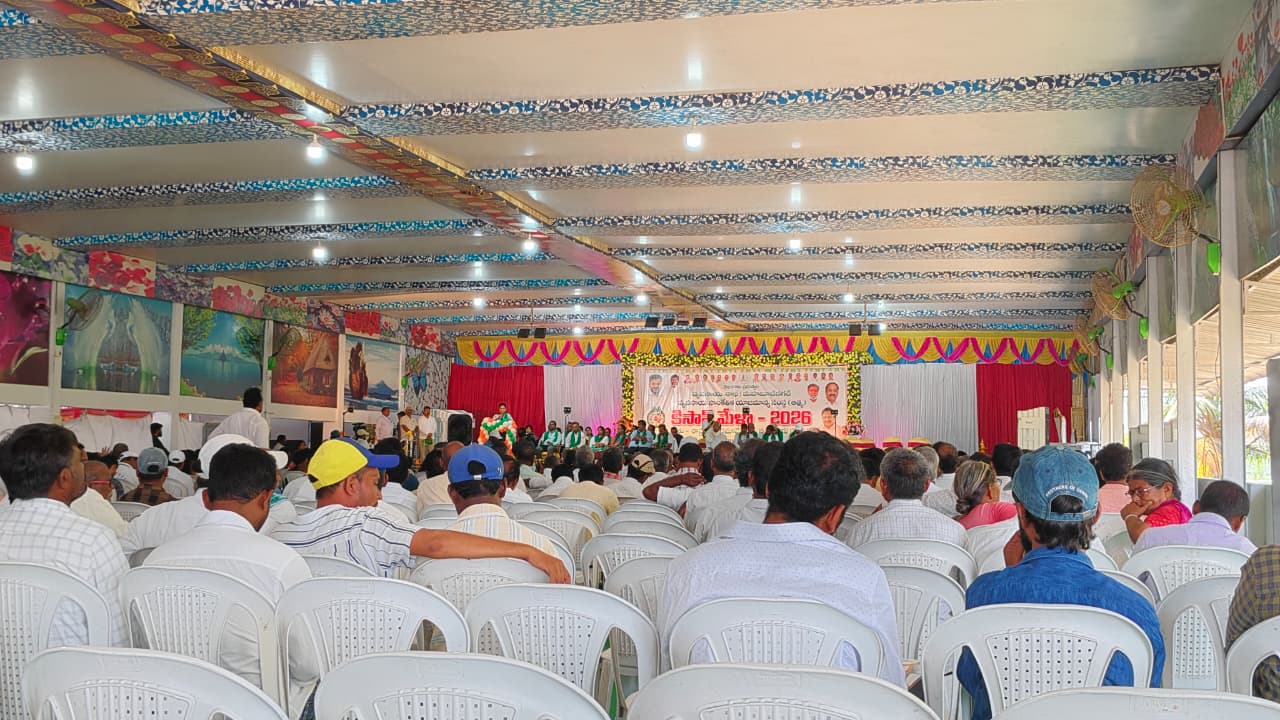
A Kisan Mela was organized by ATMA and the Department of Agriculture, Mahabubnagar District, on 08.10.2026 at Ananta Maruti Gardens, Palkonda Stage, Mahabubnagar, with the objective of creating awareness among farmers about the prevailing agricultural conditions, suitable crops and varieties for the Rabi/Yasangi season, soil and water management, natural farming, and improved agricultural technologies.
The programme was attended by Sri K. Kodandareddy, Chairman, Agriculture Commission, Hon’ble Sri Yennam Srinivas Reddy, MLA, Mahabubnagar Constituency, Smt. Khushbu Gupta, Collector, Mahabubnagar District, Sri Govind Nayak, District Agriculture Officer (DAO), Mahabubnagar, Sri Venu Gopal, DMO, along with ADAs, MAOs, AEOs, progressive farmers, farmers, and RAWEP students.
Dr. D. Shashibhushan, Principal Scientist, Groundnut Scheme, ARS, Palem; Dr. K. Kalyani, Coordinator, TRVK, Mahabubnagar; and Dr. V. Divya Rani, Scientist (Plant Pathology), ARS, Palem, participated in the Kisan Mela and interacted with the farmers.
Technical Session by Dr. D. Shashibhushan : Dr. D. Shashibhushan, Principal Scientist, Groundnut Scheme, ARS, Palem, briefed the farmers about the prevailing El Niño conditions and their possible implications for agriculture. He explained the need for proper crop planning during the upcoming Rabi/Yasangi season and advised farmers to select crops according to the availability of water and prevailing climatic conditions.
He also explained the suitable Rabi crops and improved varieties recommended for the region. The farmers were informed about the crop varieties and quality seed available through the Agricultural University and its research stations, which can be utilized for the upcoming season.
Technical Session by Dr. K. Kalyani : Dr. K. Kalyani, Coordinator, TRVK, Mahabubnagar, addressed the farmers on the importance of soil and water management for sustainable agriculture. She explained the major soil-related problems affecting agricultural productivity, including declining soil fertility, nutrient imbalance, degradation of soil health, and excessive dependence on external inputs. She emphasized the need for regular soil testing, balanced nutrient management, incorporation of organic matter, and adoption of soil-health-improving practices.
She also highlighted the importance of efficient water management and conservation, particularly under changing climatic conditions. Farmers were advised to minimize unnecessary irrigation, use available water judiciously, adopt appropriate irrigation methods, conserve soil moisture, and select crops based on available water resources.
The importance of natural farming was also explained, particularly its role in improving soil health, reducing dependence on chemical inputs, conserving natural resources, and promoting sustainable agricultural production.
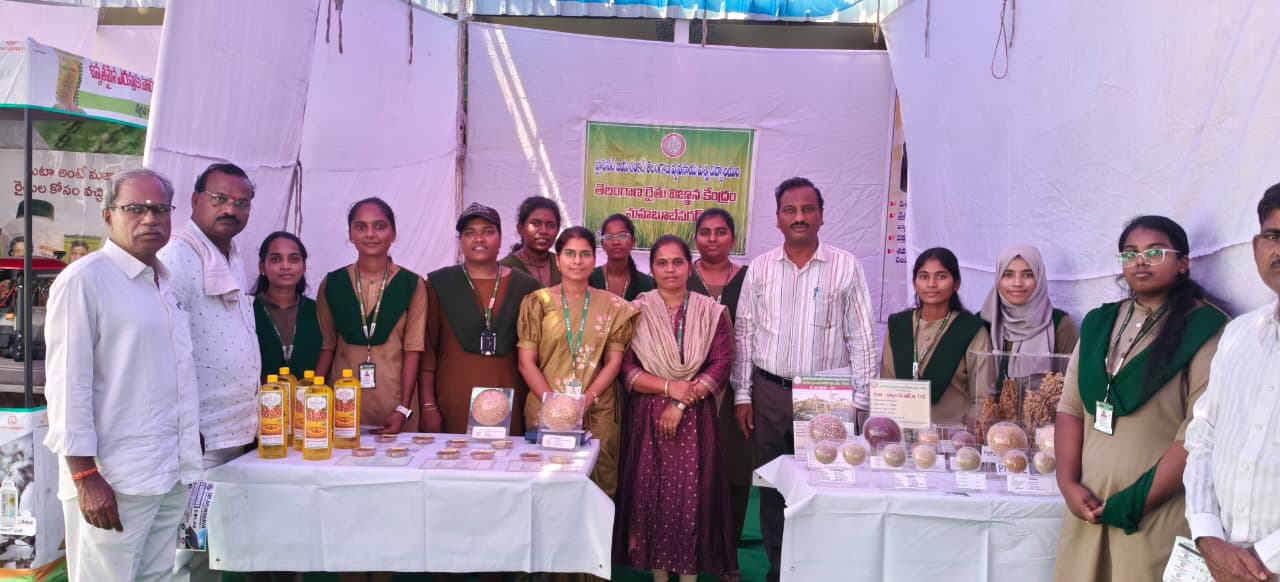
Seed and Input Exhibition : As part of the Kisan Mela, PJTSAU/ARS, Palem exhibited various seed varieties and agricultural materials available at ARS, Palem, through a dedicated stall. Farmers visited the stall and received information regarding the available varieties, seed materials, and their suitability for different cropping situations.
The exhibition provided an opportunity for farmers to directly interact with university scientists and obtain information on suitable varieties and technologies for the coming Rabi/Yasangi season.
Participation and Interaction : The Kisan Mela was attended by a large number of farmers, progressive farmers, RAWEP students, agricultural department officials, ADAs, MAOs, AEOs, and university scientists. The farmers actively participated in the technical sessions and interacted with the scientists regarding crop selection, suitable varieties, soil health, water conservation, natural farming, and Rabi crop planning.
The programme served as an effective platform for dissemination of scientific agricultural technologies and strengthening the interaction between farmers, scientists, and the Department of Agriculture. The Kisan Mela concluded successfully with active participation and interaction of farmers and officials.