
Diagnostic Field Visit was conducted on 29 October 2026 in Peddabavi
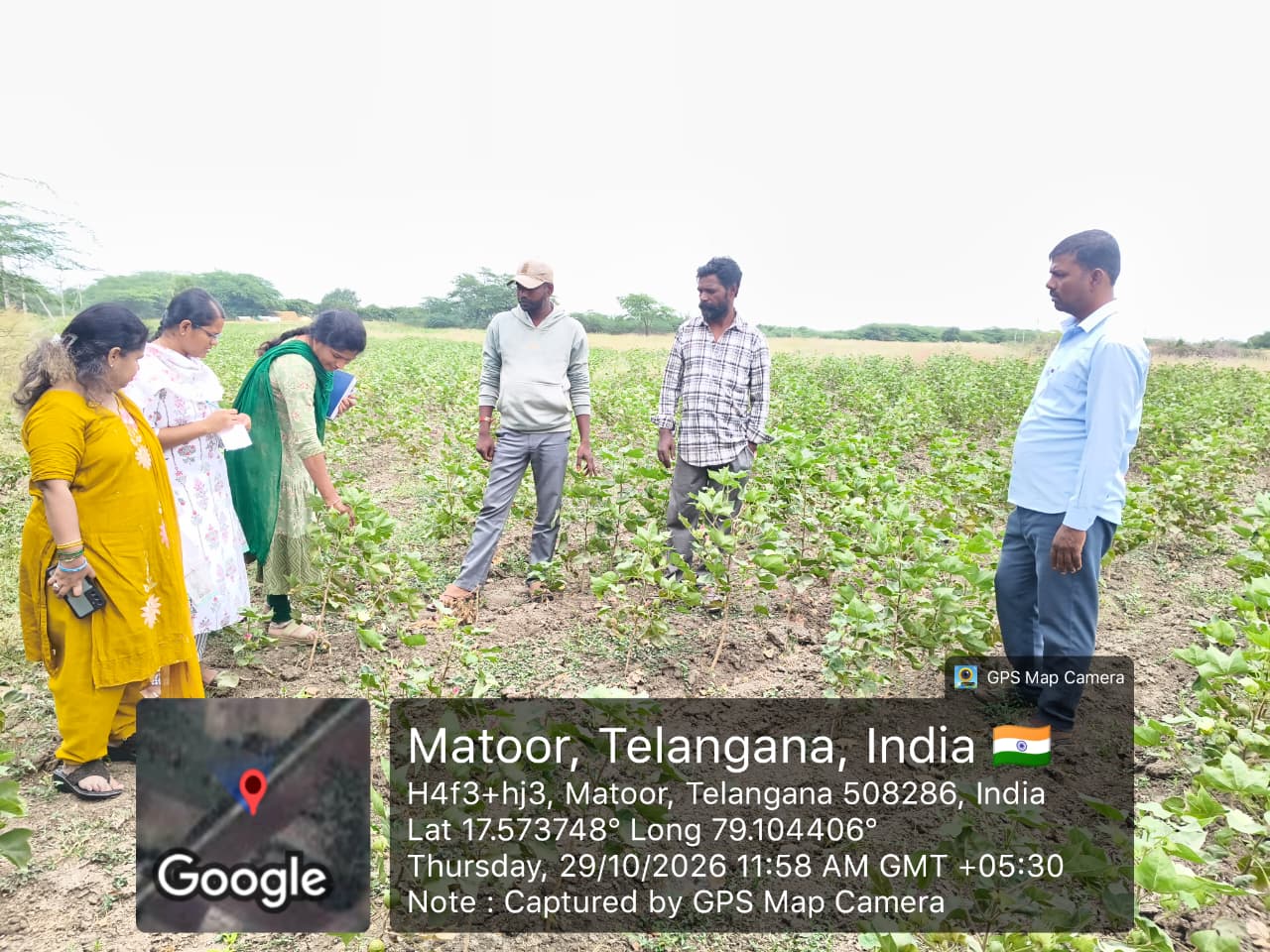
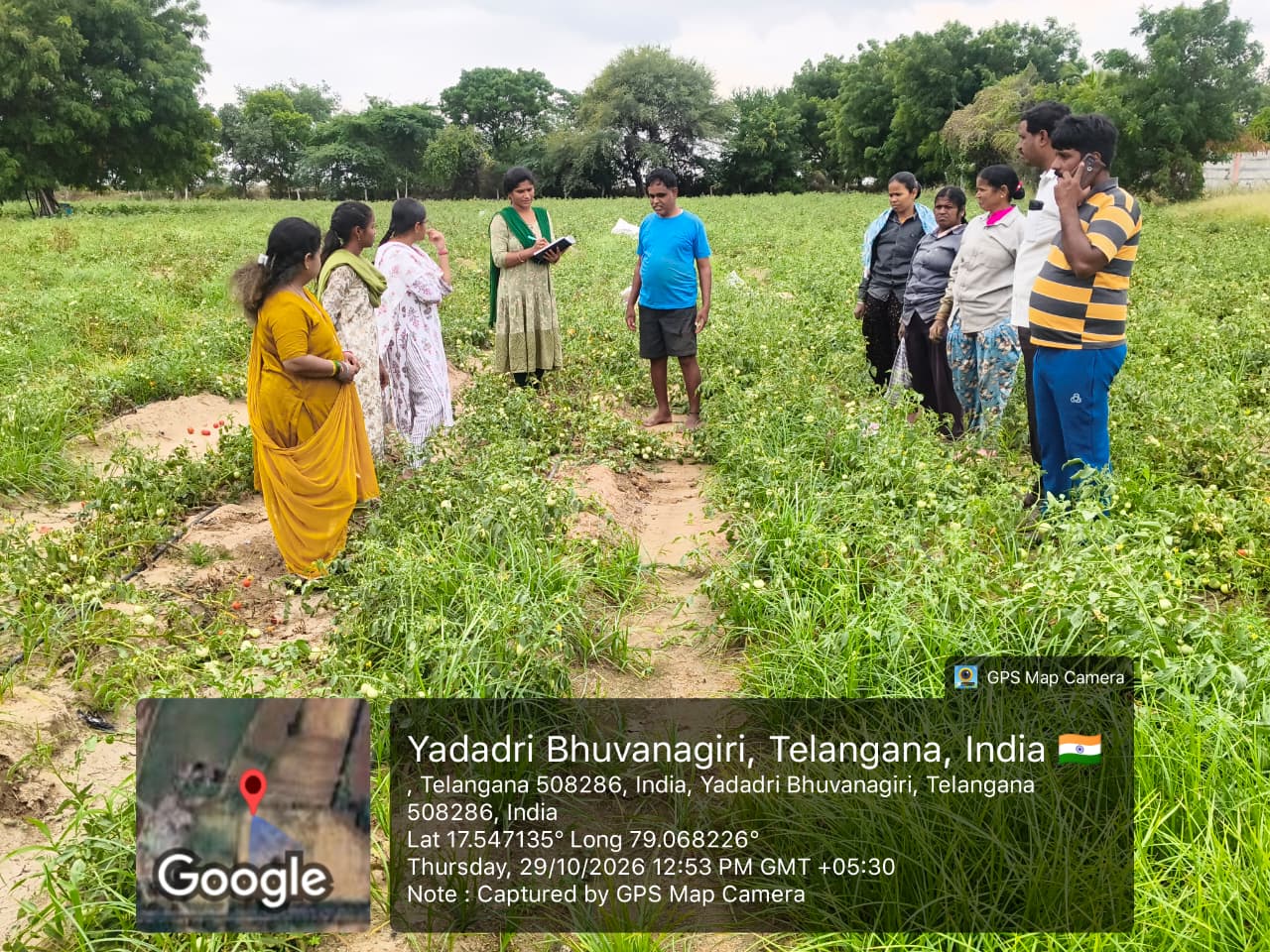
A Diagnostic field visit was conducted on 29 October 2026 in Peddabavi, Matoor and Veerthupalli villages of Motakondur Mandal, Yadadri Bhuvanagiri District, Telangana, under the guidance of Dr. D. Sreelatha, Principal Scientist and Coordinator, Telangana Rythu Vignana Kendra (TRVK), Yadadri Bhuvanagiri. Scientists visited to paddy, cotton, red gram and tomato crops.
The team comprised Dr. Ramulamma, Entomologist, KVK, Kampasagar; Dr. Swathi, Assistant Professor (Horticulture), APT, Kampasagar; and Smt. Madhavilatha, Mandal Agriculture Officer, Motakondur. The scientists interacted with farmers and assessed crop growth, plant health, and the incidence of insect pests and diseases in the standing crops.
Dr. Ramulamma emphasized the importance of regular pest monitoring and the adoption of Integrated Pest Management (IPM) practices to minimize crop losses while conserving beneficial insects. She advised farmers to assess pest incidence and undertake appropriate plant protection measures only when the economic threshold level (ETL) is exceeded. She also stressed the need to use recommended pesticides at prescribed doses and adopt suitable crop management practices according to field conditions.
Dr. Swathi highlighted scientific crop management practices for horticultural crops, particularly tomato. She explained the importance of maintaining plant health, ensuring balanced nutrient management, and identifying and managing insect pests and diseases at the appropriate stages. She advised farmers to follow recommended horticultural practices to improve crop health, quality and productivity.
Smt. Madhavilatha, Mandal Agriculture Officer, advised farmers to monitor their fields regularly and identify changes in crop growth at an early stage. She emphasized the importance of adopting plant protection measures based on pest and disease incidence and using pesticides strictly at recommended doses. She further advised farmers to follow the technical recommendations of the Department of Agriculture and consult agricultural officers promptly whenever crop-related problems arise.
The diagnostic field visit helped assess the prevailing crop conditions and create awareness among farmers about timely identification of crop problems, scientific crop management and the adoption of appropriate plant protection measures to minimize crop losses and improve productivity.