

Diagnostic Field Visit Report TRVK, JOGULAMBA GADWAL
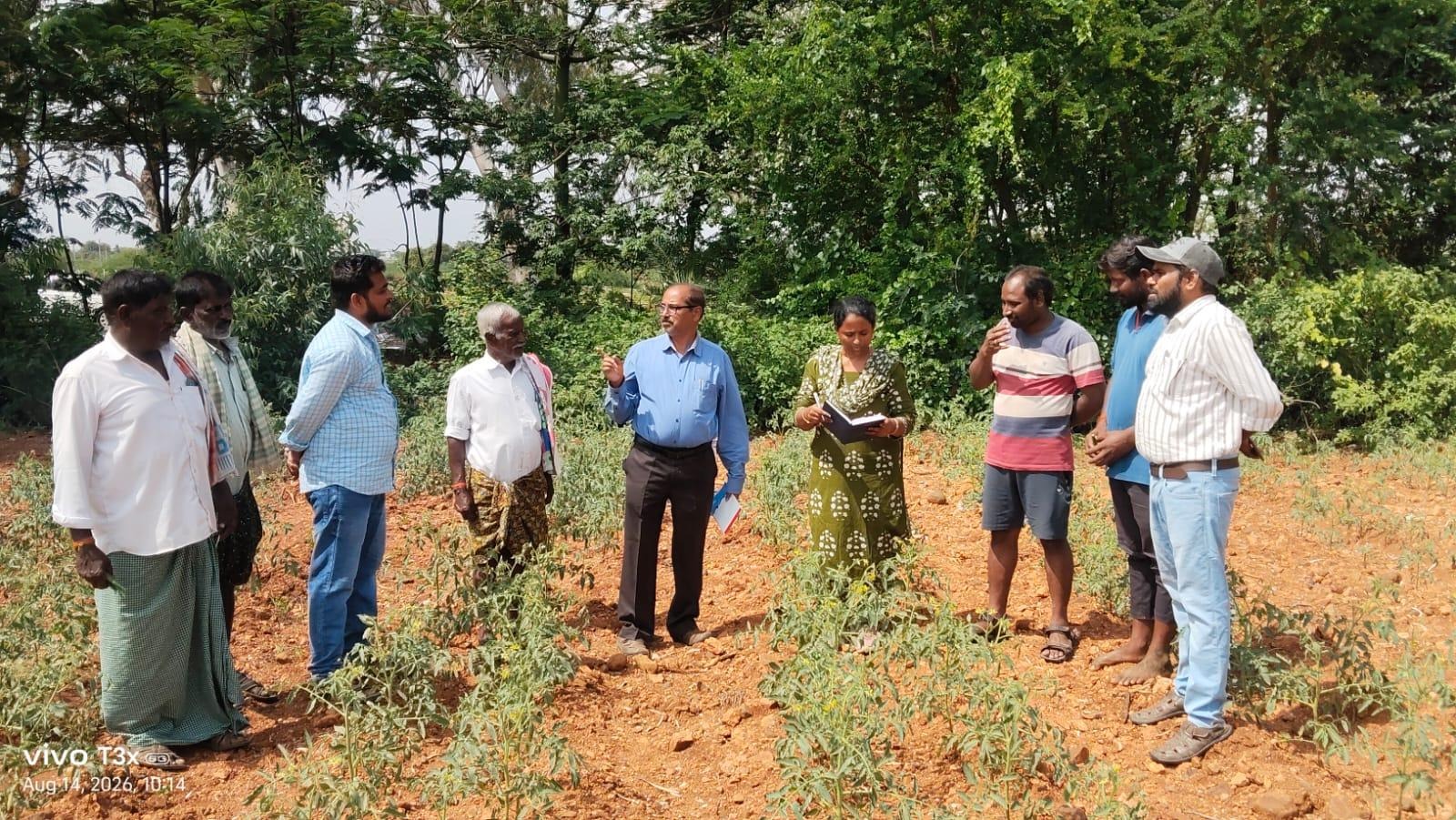
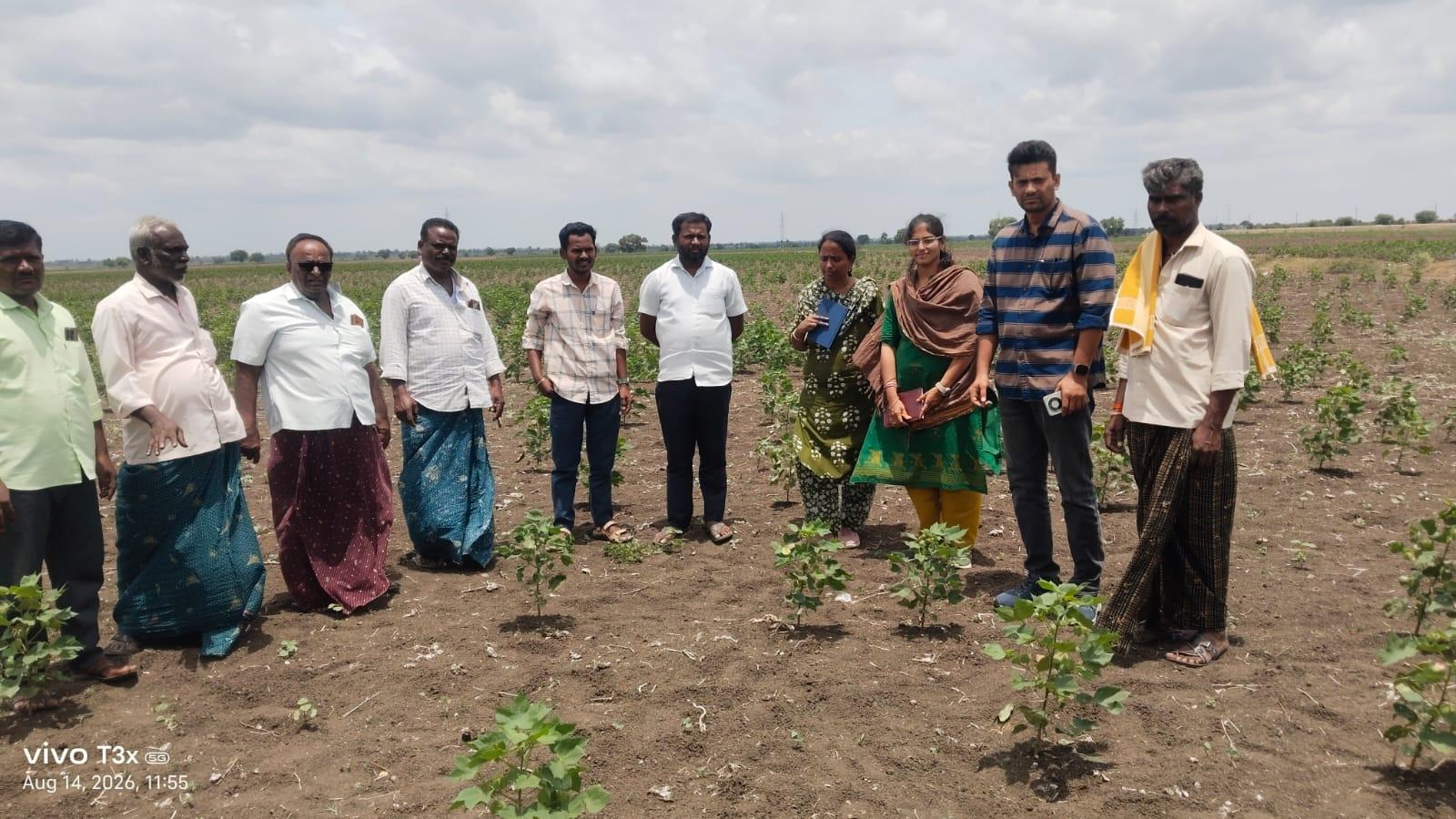
Dr. P. Archana, Coordinator, Telangana Rythu Vignyan Kendra (TRVK), Jogulamba Gadwal district, conducted a diagnostic field visit in Yerravalli and Manavapadu mandals, covering Vemula, Kondapalli, Yerravelli and Manavapadu villages, along with District Agriculture Office representative Sri Veerappa, Gadwal; MAO Sri Suresh, Yerravalli; ADA, Alampur Sri Subba Reddy; AEOs Sri Naresh, Smt. Swetha and Sri Mohan Reddy, and 25 farmers. During the visit, the diagnostic team inspected cotton, rice, chilli, bhendi (lady’s finger), tomato and redgram crops at different growth stages. Crop-specific recommendations were given to farmers based on the prevailing crop conditions.
Crop-wise Recommendations
- Chilli – Transplanting stage:
Farmers were advised to maintain optimum soil moisture and proper drainage and complete gap filling within 7–10 days. The crop should be monitored for thrips, mites and damping-off. Blue sticky traps @ 10–15/acre were recommended for monitoring thrips. Root-zone application of suitable Trichoderma-based biocontrol was suggested for management of soil-borne diseases.
- Bhendi (Lady’s finger) – 7th picking stage:
Farmers were advised to harvest tender fruits regularly at 2–3 day intervals and maintain adequate soil moisture. Regular monitoring for fruit borer, jassids and whiteflies was advised. Yellow sticky traps @ 10–15/acre were recommended for monitoring sucking pests. Infested fruits and shoots should be removed and destroyed.
- Tomato – Vegetative stage:
Farmers were advised to maintain proper soil moisture and drainage and provide adequate staking/support. Unwanted basal shoots should be removed where required. Yellow sticky traps @ 10–15/acre were recommended for monitoring whiteflies and other sucking pests. Regular monitoring for leaf diseases was also advised.
- Rice – 15 days after transplanting:
Farmers were advised to maintain shallow water of about 2–3 cm and undertake timely weed management/intercultivation. The recommended first top-dressing of nitrogen should be applied as per the local fertilizer schedule and soil-test recommendation. Regular monitoring for stem borer and leaf folder was advised.
- Redgram – Vegetative stage:
Farmers were advised to undertake timely intercultivation/earthing-up for weed control and moisture conservation. Water stagnation should be avoided. The crop should be regularly monitored for wilt and sucking pests, and affected plants should be removed and properly disposed of.
- Cotton – Flowering to boll formation stage:
Farmers were advised to maintain optimum soil moisture and avoid waterlogging. Timely intercultivation should be carried out. The crop should be closely monitored for sucking pests and pink bollworm. Pheromone traps @ 5/acre were recommended for pink bollworm monitoring, along with regular inspection of flowers and bolls. Farmers were advised to avoid unnecessary insecticide sprays and adopt need-based pest management.