

A diagnostic field visit was conducted in Aiza, Waddepally and Maldakal mandals
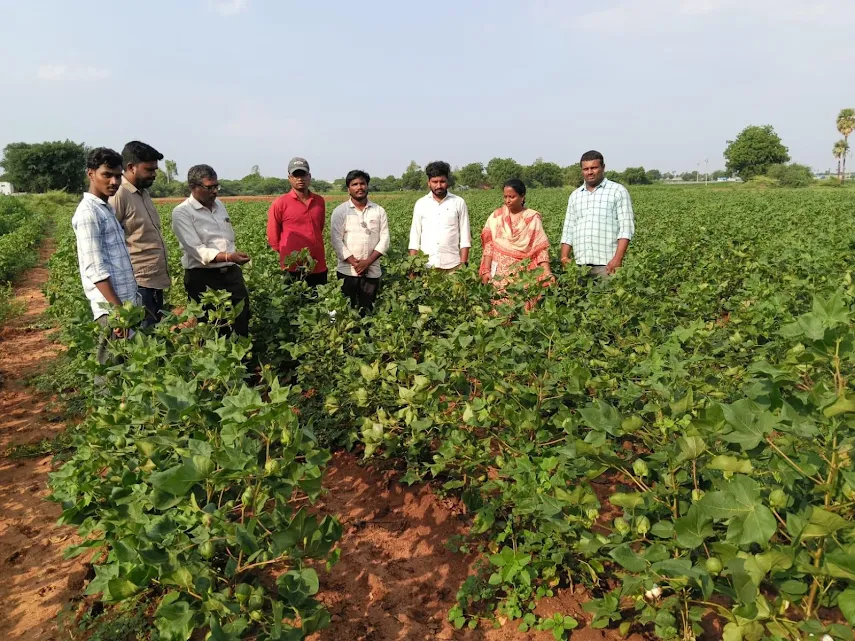
A diagnostic field visit was conducted in Aiza, Waddepally and Maldakal mandals under the guidance of Dr. P. Archana, Coordinator, TRVK, Gadwal, to assess crop conditions, identify pest and disease problems, and provide appropriate technical recommendations to farmers.
In Venkatapur village of Aiza Mandal, Dr. Archana, along with MAO Janardhan and AEO Naveen, inspected cotton and red gram (pigeon pea) crops and interacted with 20 farmers. Around 700 acres of cotton are cultivated in the village, of which approximately 50% of the crop was found to be damaged due to very low rainfall. In the affected rainfed cotton fields, the expected yield was estimated at only 1–3 quintals per acre. The borewells had also completely dried up, resulting in severe moisture stress in the crops. Cotton fields irrigated through drip systems using borewell water were found to be in better condition compared with the rainfed fields.
Farmers were advised to make effective use of farm ponds and percolation tanks constructed under the VB-GRAM scheme for rainwater conservation. Under the prevailing water-scarcity conditions, farmers were advised to cultivate rabi crops only in areas with assured water availability from tanks or borewells and to avoid sowing rabi crops in areas without assured irrigation facilities.
The team also visited Julakal Farm in Waddepally Mandal. The red gram crop cultivated over approximately 48 acres showed good growth and was currently in the vegetative stage. The overall condition of the crop was found to be satisfactory.
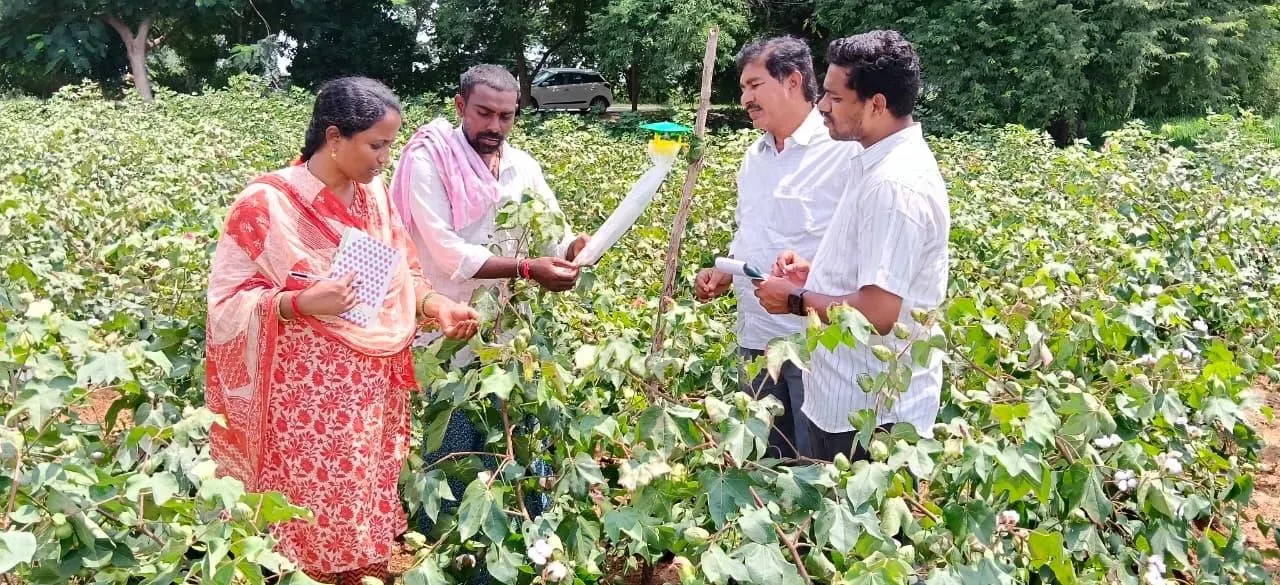
In Maldakal Mandal, Dr. Archana, along with MAO Rajasekhar and Cluster AEO Rahul Pilot, inspected cotton, paddy, okra and tomato crops. Pink bollworm moths were observed in pheromone traps installed in the cotton crop. Farmers reported that they were already monitoring pest incidence through pheromone traps. It was advised that when pest incidence exceeds the economic threshold level (ETL), Emamectin benzoate 5 SG @ 0.4 g per litre of water or Spinetoram 11.7 SC @ 0.5 ml per litre of water may be used as per label recommendations. Farmers were also advised not to repeatedly use the same chemical, but to rotate insecticides having different modes of action.
The paddy crop was found to be in the active tillering stage. In some fields, reddish symptoms were observed on the leaves and stems. Farmers were advised to first determine whether the symptoms were caused by a fungal disease or a nutritional deficiency, particularly potassium deficiency, before initiating control measures. If a fungal problem is confirmed, Carbendazim + Mancozeb 2 g per liter of water may be used as per the recommended guidelines.
The okra crop showed good growth. Farmers were advised to regularly monitor the crop for sucking pests and fruit and shoot borers and to undertake appropriate control measures only when pest populations exceed the economic threshold level.
Wilt symptoms were observed in the tomato crop. Farmers were advised to first determine whether the wilt was caused by fungal, bacterial or other factors before initiating control measures. If fungal wilt is confirmed, Carbendazim 50 WP 1 g per liter of water may be applied as a soil drench around the affected plants, as per recommendations. Severely affected plants should be removed and destroyed, excessive irrigation should be avoided, and proper drainage should be maintained in the field. Farmers were also informed that fungicides such as Carbendazim are not effective against bacterial wilt.