

Conducted a field visit to Bhukkapuram, Jogulamba and Alampur villages of Alampur Division
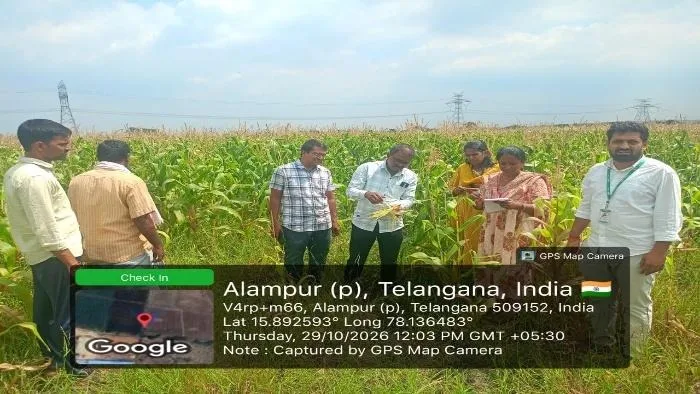
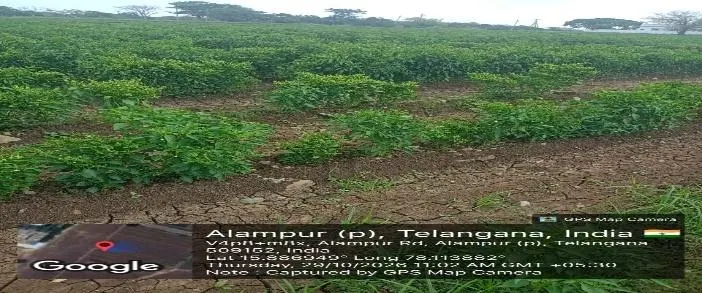
Dr. P. Archana, Coordinator, TRVK, Jogulamba Gadwal, conducted a field visit to Bhukkapuram, Jogulamba and Alampur villages of Alampur Division on 29-10-2026, along with scientists from RARS, Palem, namely A. Sriram, K. Mamatha, G. Madhuri and Dr. M. Shanker. Sri Nagarjuna, MAO, Alampur Division, and 10 farmers participated in the programme. During the visit, chilli, cotton, maize, Bengal gram, tobacco and blackgram fields were inspected to assess crop conditions, identify nutritional deficiencies, and diagnose pest and disease incidence. The following observations and recommendations were made.
- Chilli
Nutritional deficiencies, particularly boron and magnesium deficiencies, were observed in chilli fields. Farmers were advised to apply boron @ 1 g/litre of water and magnesium @ 4–5 g/litre of water.
As a follow-up nutrient management measure, a spray of Agromin Max was recommended after a gap of four days, followed by Formula 7 after another four-day interval. Three sprays were recommended at the advised intervals.
- Cotton
The cotton crop was at the second picking stage, and pink bollworm incidence was observed. Farmers were advised to complete the second picking and remove the crop promptly thereafter, wherever further retention was not economically justified. Proper disposal of infested crop residues and destruction of remaining cotton stalks were emphasized to reduce pest carryover to the next season.
- Blackgram
The blackgram crop was approximately 50 days old. Yellow Mosaic Virus (YMV) symptoms and incidence of Maruca vitrata were observed.
YMV management: Acetamiprid was suggested for managing susceptible insect vectors responsible for transmitting YMV. Farmers were informed that insecticides do not cure YMV-infected plants.
Maruca vitrata management: Ampligo @ 80 ml/acre was recommended for the management of Maruca vitrata. Farmers were advised to monitor the crop regularly and follow appropriate plant protection measures.
- Tobacco
The tobacco crop was approximately two months old and was observed to be in good condition. No pesticide spray was recommended at the time of the visit. Farmers were advised to continue regular monitoring and follow appropriate crop management practices.
- Bengal Gram
The Bengal gram crop was approximately 30 days old, and infestation by Spodoptera exigua (beet armyworm) was observed. Farmers were advised to monitor the crop regularly and adopt integrated pest management practices.
Recommendations for the management of Spodoptera exigua:
– Monitor the crop regularly for egg masses, young larvae and feeding damage.
– Collect and destroy egg masses and larval clusters wherever feasible.
– Apply a biopesticide such as Bacillus thuringiensis (Bt) to young larvae, where suitable and available.
– If infestation is severe, use a registered insecticide approved for Bengal gram and the target pest, such as emamectin benzoate 5% SG at 0.4 g/litre of water, subject to confirmation of the current crop-specific registration and dose.
– Avoid unnecessary repeated sprays and rotate insecticides with different modes of action to reduce resistance development.
- Maize
Severe infestation of fall armyworm (FAW) was observed in maize fields. Farmers were advised to undertake timely management measures, including regular scouting, destruction of egg masses and young larvae where feasible, and appropriate