

Yadadri Bhuvanagiri – Field Visit to Drought-Affected Areas on 28 October 2026
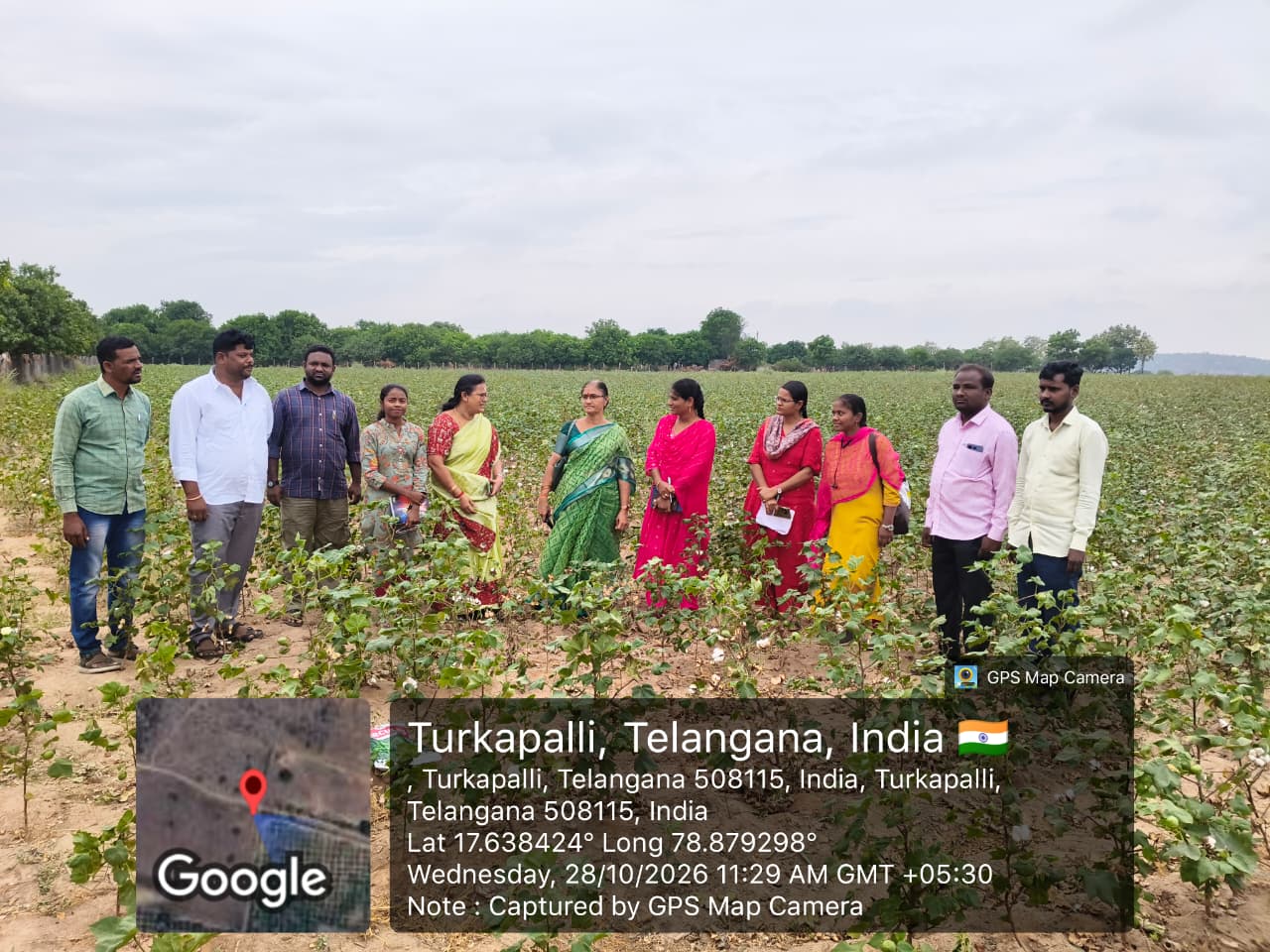
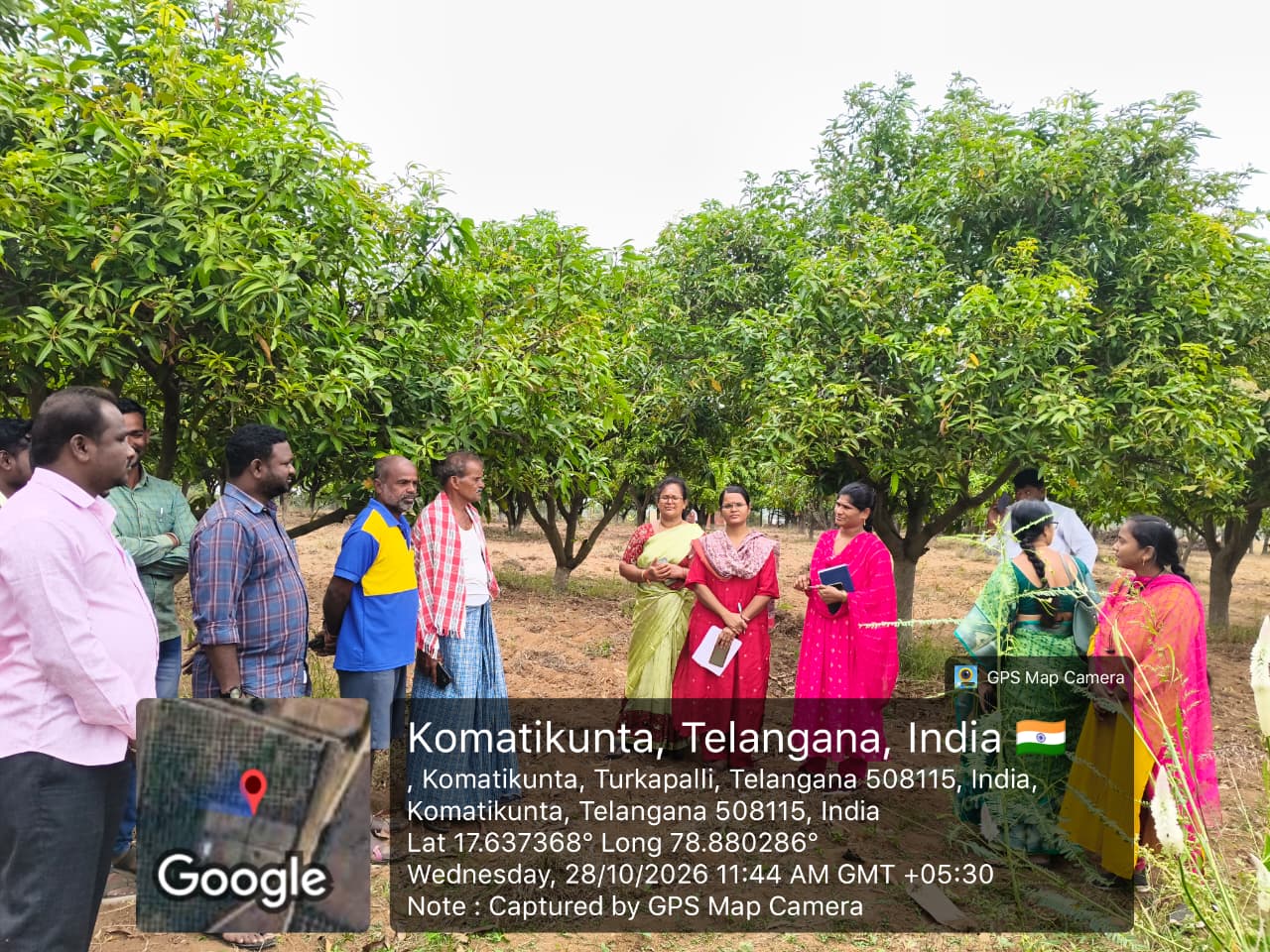
As part of the assessment of crop conditions in drought-affected areas, a diagnostic field visit was conducted by scientists on 28 October 2026 in Velpupalli and Dathaipalli villages of Turkapally Mandal, Yadadri Bhuvanagiri District. scientists visited paddy, cotton and mango crop and Dairy farm with particular emphasis on the impact of drought on crop growth and productivity. Majorly Turkapally Mandal has been identified as a drought-affected mandal in Yadadri Bhuvanagiri district.
The team comprised Dr. D. Srilatha, Principal Scientist and Coordinator, TRVK, Yadadri Bhuvanagiri; Dr. Ramulamma, Coordinator, KVK, Kampasagar; and Dr. Swathi, Assistant Professor (Horticulture), APT, Kampasagar. The scientists interacted with farmers and assessed crop growth, crop health, and the incidence of insect pests and diseases in the major crops.
Dr. D. Srilatha emphasized the importance of regular field monitoring and timely identification of crop-related problems. She advised farmers to adopt need-based plant protection measures based on pest incidence and economic threshold levels (ETL), and to use pesticides strictly at the recommended doses.
Dr. Ramulamma highlighted the importance of systematic pest surveillance and the adoption of Integrated Pest Management (IPM) practices, including the conservation of natural enemies. She advised farmers to use appropriate plant protection chemicals only when necessary and in accordance with recommended guidelines.
Dr. Swathi emphasized the scientific management of mango orchards, with particular attention to plant health, vegetative growth and nutrient management. She advised farmers to adopt recommended horticultural practices based on crop requirements to improve crop performance and productivity.
As part of the visit, the team inspected the dairy farm of Sri Shrisailam and reviewed his integrated farming practices. The farmer is engaged in milk production and utilizes cattle dung and urine as organic inputs for mango cultivation and fodder production. The team observed the integration of livestock and crop production, highlighting the importance of recycling farm resources and promoting sustainable farming practices.
Smt. K. Uma, Mandal Agriculture Officer, advised farmers to follow the technical recommendations of the Department of Agriculture and consult the concerned agricultural officers for the timely identification and management of crop-related problems.
Major Observations:
During the field visit, cotton crops were observed to exhibit stunted growth, with a considerable reduction in expected yield compared with the previous year. Due to the prevailing drought conditions and inadequate rainfall, cotton productivity is projected to decline substantially, with the estimated yield expected to be around 3 quintals per acre. The observations highlighted the adverse impact of moisture stress on crop growth and productivity in the drought-affected mandal.
The field visit was attended by Agricultural Extension Officers (AEOs) Smt. B. Umarani and Sri Prithvi, along with the participating farmers.