
Yadadri Bhuvanagiri,PJTAU, in collaboration with Seva Spoorthi Foundation, Hyderabad, organized a farmers’ exposure visit
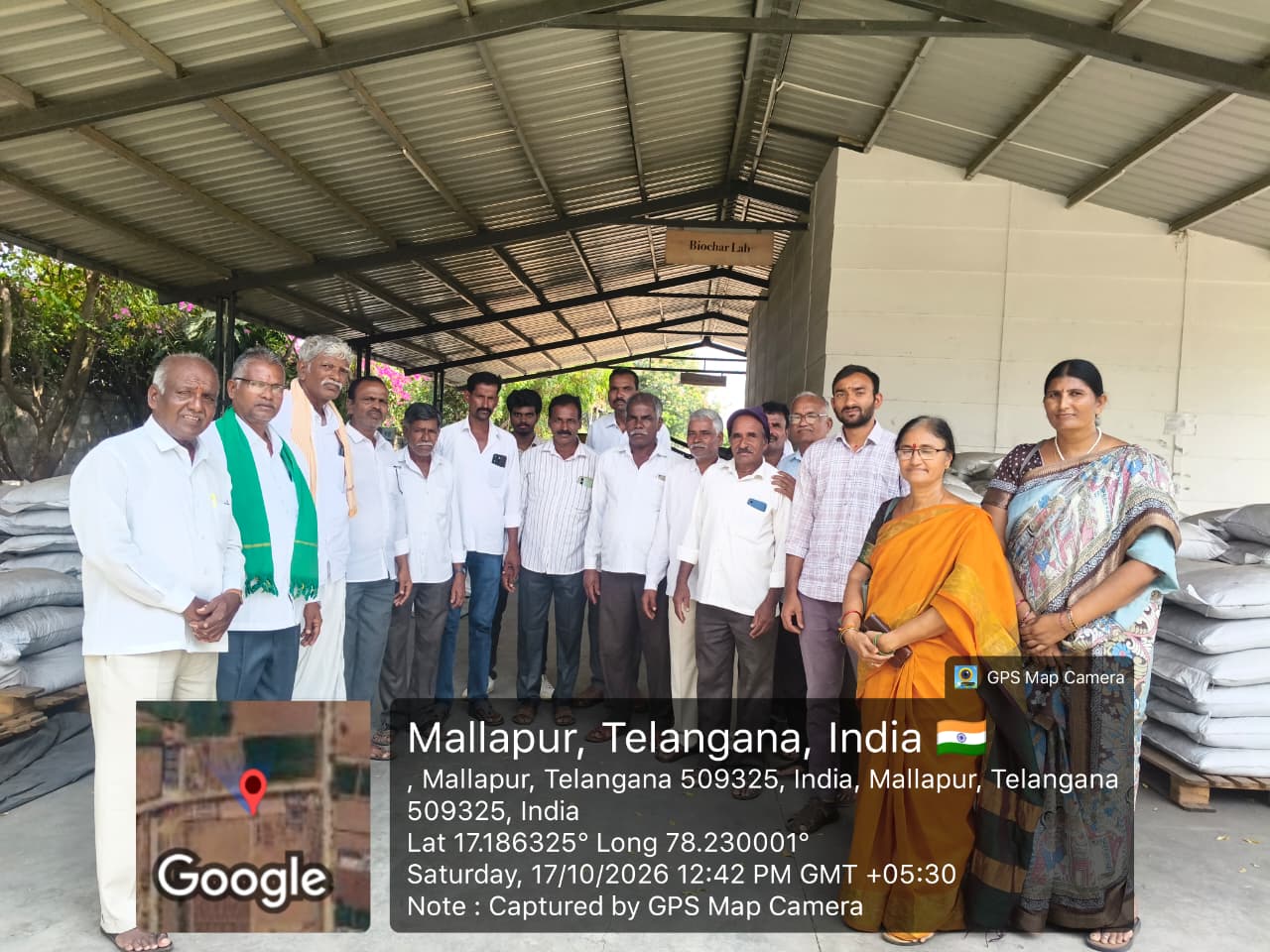
Telangana Rythu Vignana Kendra (TRVK), Yadadri Bhuvanagiri,PJTAU, in collaboration with Seva Spoorthi Foundation, Hyderabad, organized a farmers’ exposure visit on 17 October 2026 to create awareness about modern horticultural practices and innovative agricultural technologies. The programme was conducted at the Heartfulness Grafting Research and Skill Development Centre, Kanha Shanti Vanam, Hyderabad. 23 Farmers from Veeravelli, Puligilla, Bollepalli, Bommaipalli, Rayagiri, Motakondur, Balempalli and other villages of Yadadri Bhuvanagiri district participated in the programme.
Dr. D. Srilatha, Principal Scientist and Coordinator, TRVK, Yadadri Bhuvanagiri, explained the objectives and importance of the exposure visit. She emphasized that such programmes provide farmers with opportunities to observe modern horticultural technologies firsthand and understand their practical applications. She highlighted the importance of transferring scientific knowledge to farmers at the field level to enable them to make informed decisions and improve agricultural productivity.
Mr. Ratnakar, Project Manager, Seva Spoorthi Foundation, highlighted the importance of adopting scientific agricultural practices for farmers’ development. He explained that integrating modern technologies with traditional farming practices can help improve crop quality, enhance productivity and reduce cultivation costs. He also stressed the importance of soil health management, efficient utilization of resources, selection of quality planting material and scientific nursery management. He noted that exposure visits facilitate knowledge sharing among research institutions, agricultural experts and farmers, thereby contributing to rural agricultural development.
Mr. Sivasaravanan Arumugam, Director, Vanashanti Farmers Producer Company Limited, explained the grafting technology used in vegetable crops. He highlighted the potential benefits of grafting, including the use of suitable rootstocks to improve plant performance and reduce the impact of certain soil-borne diseases. He also explained the importance of selecting appropriate rootstocks and scions, producing quality grafted seedlings and ensuring proper plant care. He emphasized that selecting suitable technologies based on crop requirements, climatic conditions and soil characteristics can contribute to improved crop health, yield and quality.
As part of the visit, farmers toured the biochar production unit and learned about the biochar production process, its agricultural applications and its potential role in improving soil properties. They subsequently visited the nursery section, where they observed various stages of seedling production, including sowing, seedling raising, grafting, healing and hardening. The demonstrations provided practical insights into the scientific management of nurseries and the production of quality planting material.
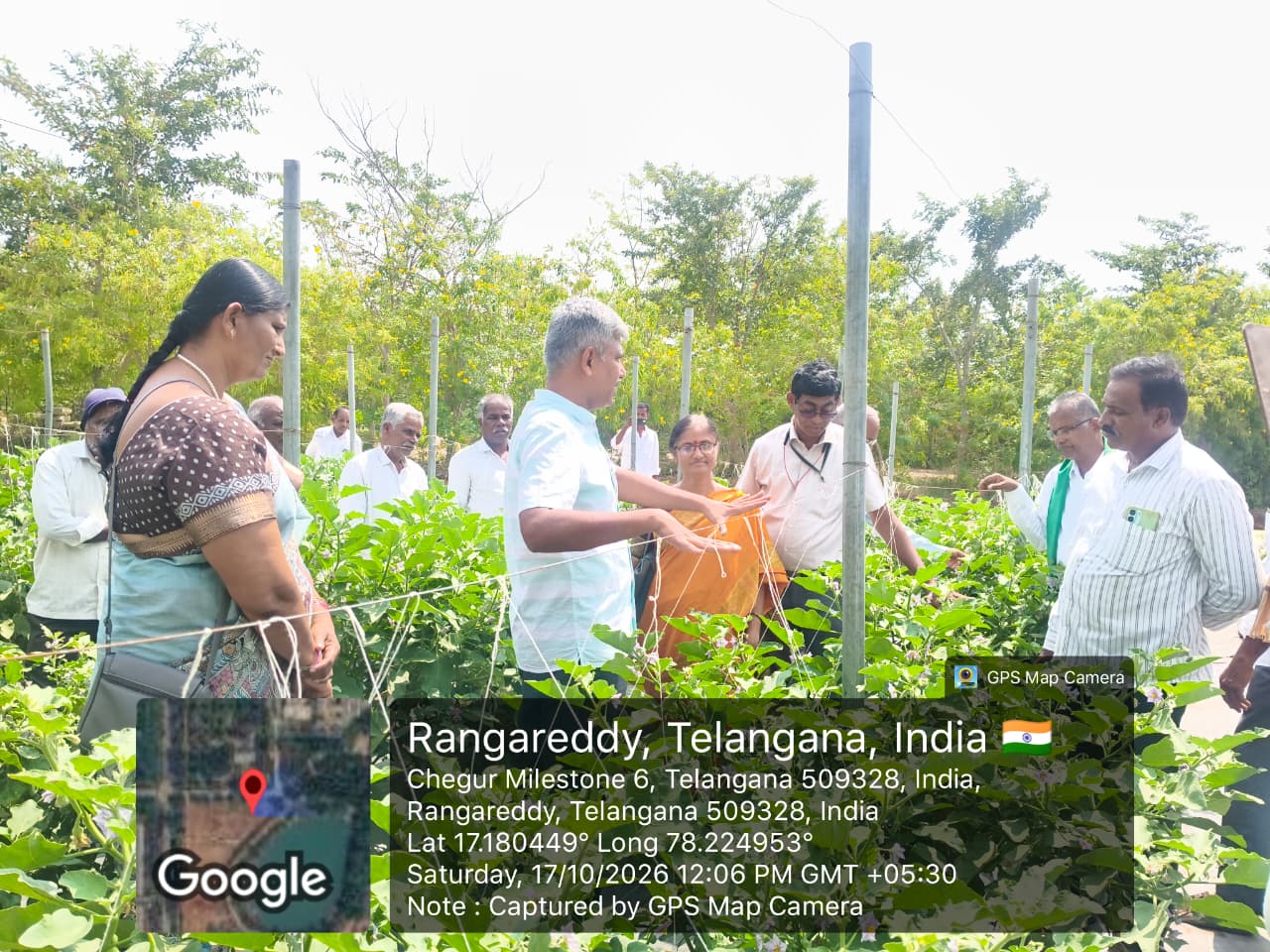
At the trial field, farmers observed the differences between grafted and non-grafted plants and learned about the precautions to be taken from seedling selection to transplanting in the main field. The practical demonstrations helped participants understand the potential applications of grafting technology and other modern horticultural practices under field conditions.
During the programme, progressive farmer Mr. Kanchi Mallaiah, Mr. Enugu Venkata Reddy of Veeravelli village, Mr. T. Yadagiri of Balempalli village and Mr. P. Sattireddy of Puligilla village shared their views on the usefulness of the exposure visit. They stated that such initiatives provide farmers with valuable opportunities to learn about modern agricultural technologies directly from experts and apply the knowledge gained to improve farming practices.
The exposure visit enhanced farmers’ awareness of modern horticultural practices, vegetable grafting technology, nursery management and biochar applications. The programme demonstrated the importance of collaboration among agricultural universities, extension institutions and voluntary organizations in disseminating scientific technologies to farming communities and promoting sustainable agricultural development.