

Diagnostic Field Visit and Awareness Programme by Village Adoption Committee, Rajendranagar on 18.9.2026
The Village Adoption Committee of the College of Agriculture, Rajendranagar, Professor Jayashankar Telangana Agricultural University (PJTAU), comprising Convenor Dr. K. Bhanu Rekha, Professor, Department of Agronomy, and Members Dr. K. Sumalini, Professor, Department of Genetics and Plant Breeding; Dr. M. Madhavi, Assistant Professor, Plant Pathology; and Dr. D. Rajini, Assistant Professor, Horticulture, in collaboration with Sarpanch Sri C. Narasimha Reddy, conducted a diagnostic field visit and awareness programme at Mallapur adopted village, Kothur Mandal, Rangareddy District, on 18th September 2026.
The team first visited the paddy fields, where farmers were advised on the importance of balanced application of nitrogen (N), phosphorus (P) and potassium (K). The need for applying potassic fertilizers at the recommended rate of 27 kg per acre was emphasized. The team explained the important role of potassium in improving crop tolerance to drought, yield enhancement and seed quality.
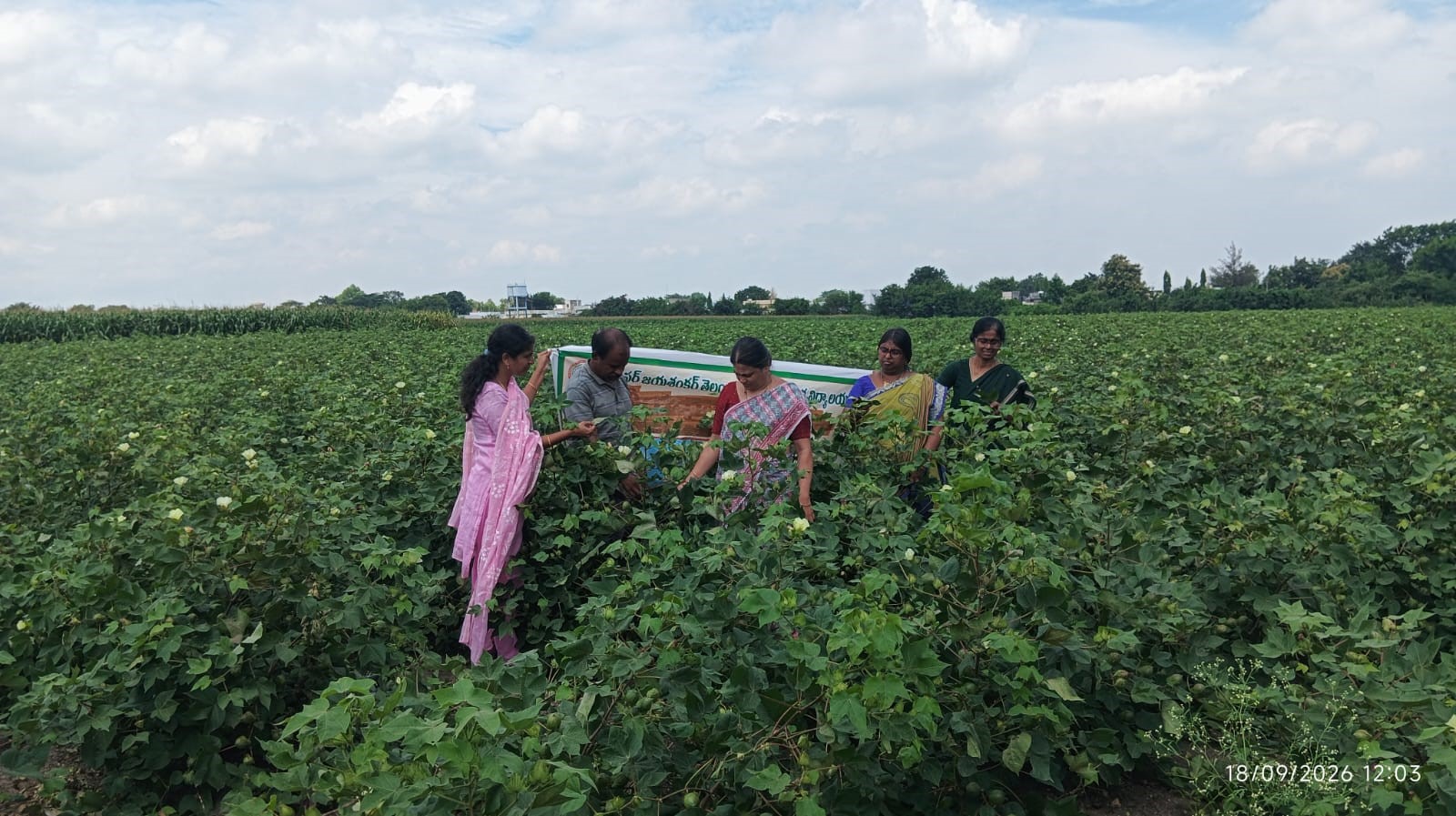
It followed visit to the cotton crop which was at flowering to boll-development stage. A moderate incidence of sucking pests, particularly jassids, was observed. Farmers were advised to monitor the pest population and apply cyantraniliprole at 120 ml per acre upon crossing the Economic Threshold Level (ETL). The team stressed the importance of need-based insecticide application at recommended doses and advised farmers to rotate insecticides belonging to different modes of action to help delay the development of insecticide resistance.
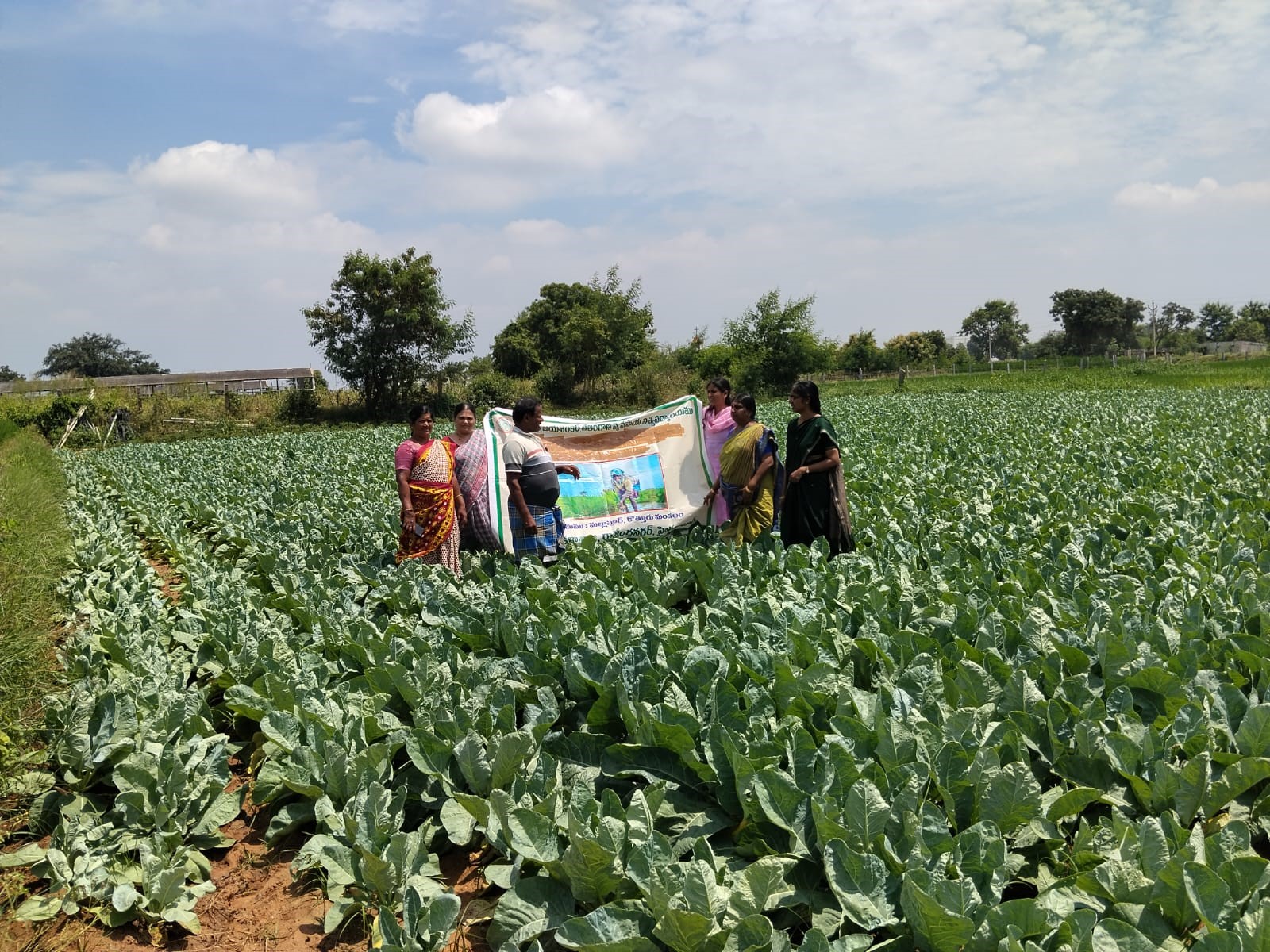
The team subsequently proceeded to the cauliflower fields and advised farmers to tie the outer leaves around the curd using rubber bands to protect the curd and enhance its quality and colour. To manage diamondback moth, the team suggested including mustard as an intercrop/trap crop. The use of neem oil at 5 ml per litre of water and at later stages when required, emamectin benzoate 5% SG at 0.4 ml per litre of water was also suggested as part of need-based pest management.
The team further created awareness among farmers regarding suitable vegetable crops and