
Awareness Campaign on Healthy Edible Oil Consumption- Khet Bachao Abhiyan, College of Agriculture
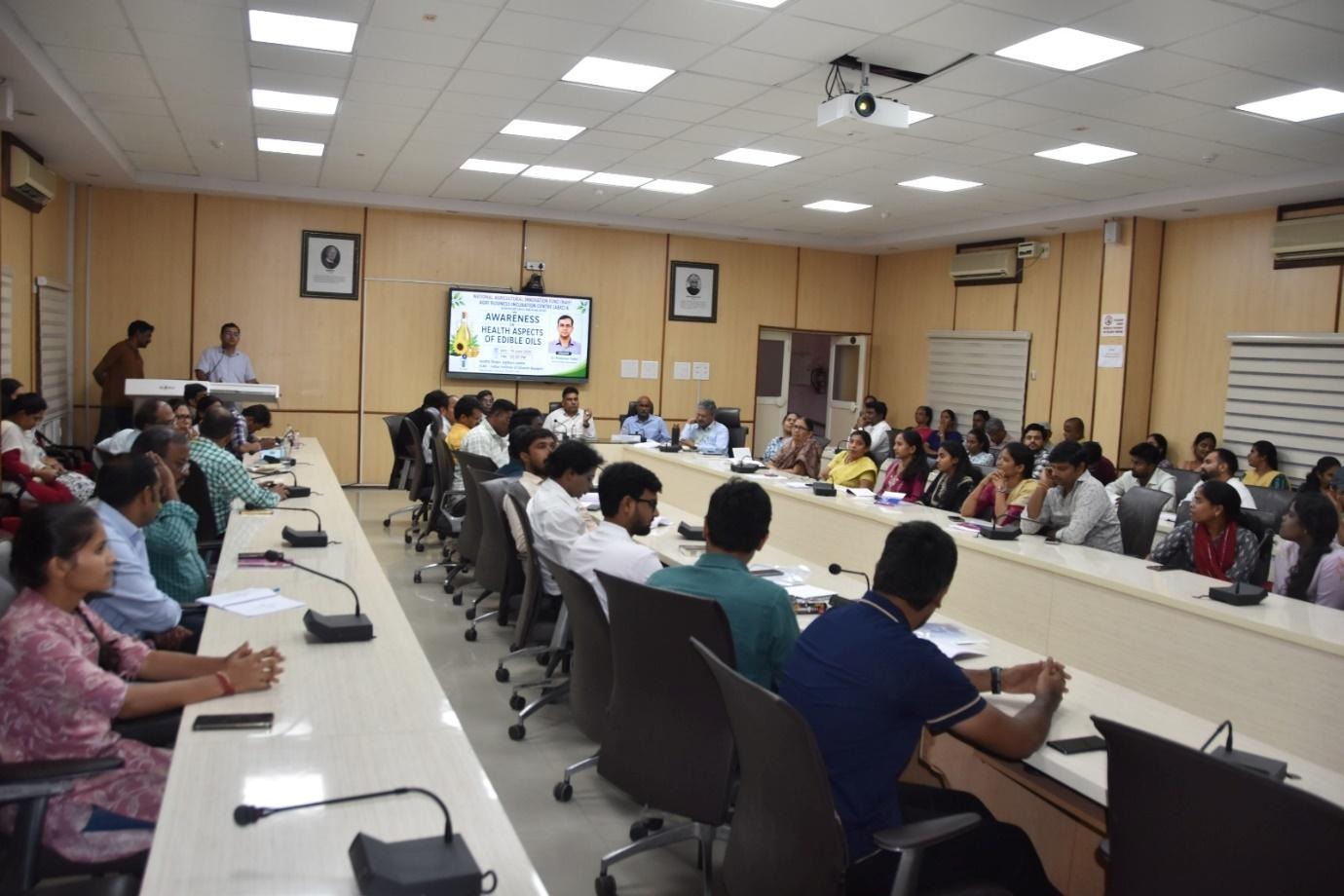
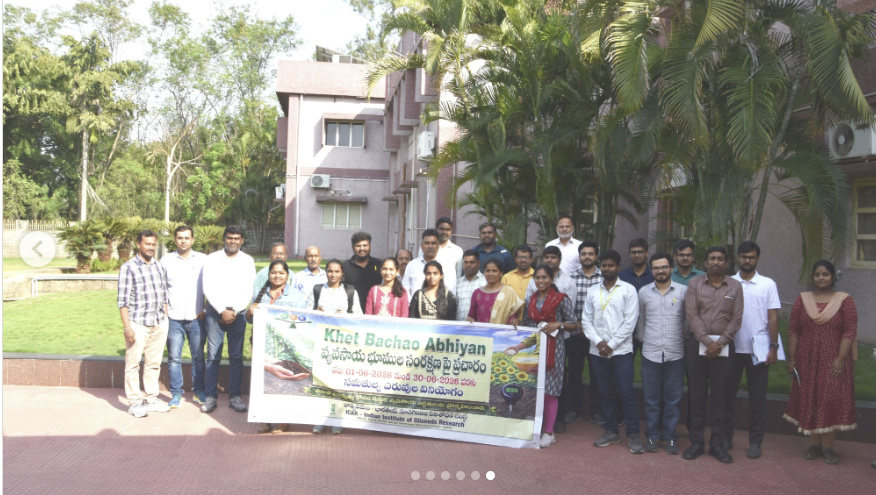
The National Service Scheme (NSS) Unit, College of Agriculture, Rajendranagar, actively participated in the Awareness Campaign on Healthy Edible Oil Consumption organized by ICAR–Indian Institute of Oilseeds Research (IIOR), Rajendranagar, Hyderabad, under the Khet Bachao Abhiyan on 19 June 2026. The programme aimed to create awareness among students regarding the nutritional importance of edible oils, healthy dietary practices, and informed food choices for maintaining good health and well-being. Six postgraduate and Ph.D. students participated in the programme representing the NSS Unit of the College of Agriculture, Rajendranagar.
Participation from NSS Unit
The following students participated in the programme on behalf of the NSS Unit, College of Agriculture, Rajendranagar:
- E. Sneha – Entomology
- T. Shrisha – Entomology
- V. Sowmya – Agricultural Economics
- D. Suvarchala – Agricultural Economics
- B. Vimala – Plant Physiology
- M.V. Deborah – Plant Pathology
The programme was conducted under the guidance of Dr. R. K. Mathur, Director, IIOR, with Dr. G. E. C. H. Vidya Sagar, Registrar, PJTAU as the Chief Guest. A total of 40 participants attended the programme. The technical session was delivered by Dr. Praduman Yadav, Senior Scientist (Biochemistry), IIOR, who provided valuable insights into the nutritional and health aspects of edible oils. The session commenced with an explanation of the difference between oils and fats. Oils were described as substances that remain liquid at room temperature, whereas fats are solid or semi-solid under similar conditions.
Various edible oils, including groundnut, sunflower, safflower, sesame, mustard, coconut, olive, linseed, and palm oils, were introduced and their nutritional importance was discussed. The speaker emphasized that fats should contribute approximately 20–35 per cent of daily caloric intake and highlighted the significance of maintaining a balanced fat consumption pattern. It was explained that while the average annual fat requirement of an individual is around 24 kg, a substantial portion is obtained from invisible sources present in foods; therefore, direct consumption of cooking oil should be moderate.
The programme also covered important topics such as the comparison between cold-pressed and refined oils, the role of essential fatty acids in human health, age-wise oil requirements, and the relative importance of oils, proteins, and carbohydrates in a balanced diet. Special emphasis was placed on the use of multiple edible oils rather than relying on a single oil source, as blended or diversified oil consumption helps achieve a better balance of fatty acids and nutrients.
The session further highlighted quality standards and regulatory aspects related to vegetable oils. The speaker concluded that no single edible oil can meet all nutritional requirements and recommended the inclusion of a variety of edible oils, including palm oil, as part of a balanced diet.
Further NSS Pos joined online session and gained valuable knowledge regarding edible oils, nutrition, and healthy dietary practices. The programme strengthened awareness about balanced nutrition and empowered NSS volunteers to disseminate scientifically sound information on healthy food choices among the farming community and society at large.