
As part of the Village Adoption Programme at Mallapur village, Kothur Mandal, Ranga Reddy District, a field visit and farmers’ training programme was organized by the College of Agriculture, Rajendranagar, to disseminate improved agricultural technologies and provide practical knowledge on various aspects of crop production, soil health management, organic farming, nursery management and integrated pest and disease management.
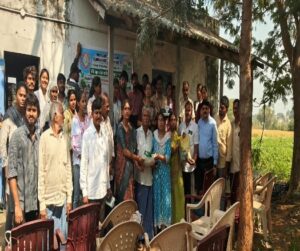
The programme was attended by a team of scientists from the College of Agriculture, Rajendranagar, comprising Dr. G. Manjulatha, Dr. K. Bhanurekha, Dr. A. Geetha and Dr. D. Rajani. Sri Narshimha Rao, Sarpanch of Mallapur village, and Sri Gopal Nayak, Mandal Agricultural Officer, participated in the programme. Final-year AELP students and 25 farmers and other participants also attended the programme.
- Training on Raising Vegetable Seedlings in Plug Trays
A practical training programme on raising vegetable seedlings in plug trays was conducted. The participants were sensitized to the importance of quality seedling production through modern nursery techniques. Demonstrations were given on selection of plug trays, preparation and filling of growing media, seed sowing, watering and maintenance of healthy seedlings.
The advantages of plug-tray nursery production, including uniform seedling growth, efficient utilization of seeds, better root development, reduced transplanting shock and improved seedling establishment, were explained to the participants.
- Training on Vermicompost Production and Utilization
The importance of vermicompost in improving soil fertility and maintaining soil health was highlighted. The participants were trained on:
- Procurement and selection of suitable materials for vermicomposting.
- Preparation of vermicompost beds using appropriate organic substrates.
- Scientific methods of bed preparation and maintenance.
- Collection and utilization of vermiwash as a liquid organic input.
- Application of vermicompost and vermiwash for improving crop growth and soil health.
The importance of recycling farm waste and adopting organic nutrient management practices was emphasized.
- Demonstration on Soil Sample Collection and Soil Testing
A method demonstration on the collection of representative soil samples for soil testing was conducted. The participants were explained the appropriate procedure for collecting soil samples from different locations in the field, avoiding unusual spots, and preparing representative samples for laboratory analysis.
The importance of soil testing in determining nutrient requirements, balanced fertilizer application, improving fertilizer use efficiency and reducing unnecessary fertilizer expenditure was highlighted. The need for sustainable soil fertility management through judicious fertilizer application and integrated nutrient management was emphasized.
- Training on Sweet Corn Production and Value Addition
The importance of sweet corn cultivation as a remunerative crop was discussed. The participants were sensitized to scientific crop production practices, including crop establishment, nutrient management and harvesting at the appropriate stage. The importance of value addition and opportunities for improving farmers’ income through processing and marketing of sweet corn were also highlighted.
- Training on Paddy Nursery Raising and Management
The participants were given information on scientific methods of paddy nursery raising and management. Important practices such as nursery bed preparation, seed treatment, seed sowing, water management, nutrient application and protection against pests and diseases were explained. The importance of raising healthy and vigorous seedlings for successful crop establishment was emphasized.
- Integrated Pest and Disease Management
The importance of integrated pest and disease management (IPM) in agricultural crops was highlighted. The participants were sensitized to the adoption of preventive and need-based management practices, including cultural, mechanical, biological and chemical methods of pest and disease control. The importance of regular field monitoring, timely identification of pests and diseases, and judicious use of plant protection chemicals was emphasized to minimize crop losses and ensure sustainable crop production.
- Diagnostic Field Visit to Chilli and Rose Crops
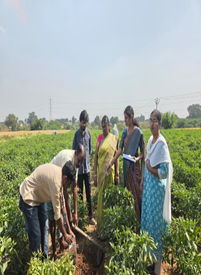
As part of the programme, a diagnostic field visit was undertaken to the chilli and rose fields of Sri C. Narendra Reddy. The scientists inspected the crops and interacted with the farmer regarding crop growth, field conditions and problems encountered during cultivation.
The team observed the crop condition and provided technical guidance on crop management, identification of pest and disease problems, and suitable management measures. The visit provided an opportunity for direct interaction between scientists and farmers and helped in addressing field-level agricultural problems through scientific interventions.
- Distribution of Seeds
The programme concluded with the distribution of safflower and redgram seeds to the participating farmers to encourage crop diversification and promote the cultivation of suitable crops. The participants were advised to follow recommended package of practices for successful crop establishment and improved productivity.
- Outcome of the Programme
The programme provided an effective platform for interaction among scientists, agricultural officers, village representatives, students and farmers. The practical demonstrations and technical discussions enhanced farmers’ awareness and knowledge in the following areas:
- Modern vegetable seedling production using plug trays.
- Vermicompost production, bed preparation and vermiwash utilization.
- Scientific soil sampling and soil testing.
- Balanced fertilizer application and improved fertilizer use efficiency.
- Sweet corn production and value addition.
- Scientific paddy nursery raising and management.
- Integrated pest and disease management.
- Crop-specific diagnostic services and technical recommendations.
- Promotion of crop diversification through distribution of safflower and redgram seeds.
- Conclusion
The field visit and multidisciplinary farmers’ training programme organized under the Village Adoption Programme at Mallapur village was successful in disseminating improved agricultural technologies and addressing farmers’ field-level requirements. The hands-on demonstrations, diagnostic field visit and interaction with farmers helped bridge the gap between agricultural research and field-level implementation. The programme emphasized sustainable agriculture through scientific soil and nutrient management, organic inputs, integrated pest and disease management, crop diversification and value addition.
The programme concluded with the distribution of safflower and redgram seeds to the farmers.