
College of Community Science, Saifabad
The B.Sc. (Hons.) Community Science (formerly known as B.Sc. (Hons.) Home Science) is a four-year professional degree program. The first three years comprise common basic and core courses along with skill enhancement modules, providing a strong foundation across all disciplines. In the final year (7th semester), students will choose a specialization in one of the five departments through elective courses. The last semester (8th) is dedicated to the Student READY Programme, which includes Rural Awareness Work Experience (RAWE), experiential learning, internship or a special project within the chosen department.
Vision
The vision of the college is to enhance quality and excellence in the teaching–learning process, strengthen research, and develop skilled human resources in the fields of nutrition and dietetics, food science, consumer education, interior design and ergonomics, textiles, apparel and fashion design, child development, child and family counselling, mass communication, and journalism.
Mission
The mission of the faculty is to improve the standard of living of individuals in general, and rural families in particular, through teaching, research, and extension activities. The primary focus is on empowering women and the girl child in both rural and urban households through self-employment, enabling them to become better resource managers and contribute to rural development. The mission is translated into action through the following objectives.
Objectives
- To strengthen skills and potentials of students through scientific principles, knowledge and experience acquired for optimum living.
- To develop manpower for end users
- To foster development of students towards innovative research to augment the quality of life of family, community and industry in the changing and challenging life scenario.
- To enable development of entrepreneurial skills at various levels.
- To instil appreciation for rural life, its problems and channel relevant mechanisms for progress.
The five departments under the Faculty of Community Science are:
- Foods and Nutrition
- Human Development and Family Studies
- Apparel Design and Textiles
- Resource Management and Consumer Sciences
- Extension Education and Communication Management
Upon successful completion of the program, students are awarded the B.Sc. (Hons.) Community Science degree. Graduates are eligible to pursue postgraduate (PG) and doctoral (Ph.D.) studies with specializations in any of the five core disciplines offered by the faculty.
So far 3250 undergraduates, 1051MSc students, 145 PhD students and one Post Doctoral student have passed out from this College.
Implementation of VI Deans Syllabus in Community Science (from Academic Year 2024-25):
- The College of Community Science, PJTAU, adopted VI Deans syllabus as per National Education Policy (NEP) 2020 guidelines.
- The re-structured curriculum emphasises greatly on Skill Enhancement Courses.
Objective of the Restructured Curriculum (B.Sc. (Hons.) Community Science):
- To strengthen critical thinking, creativity, communication, and collaboration.
- To promote a holistic and flexible learning experience.
Associate Dean
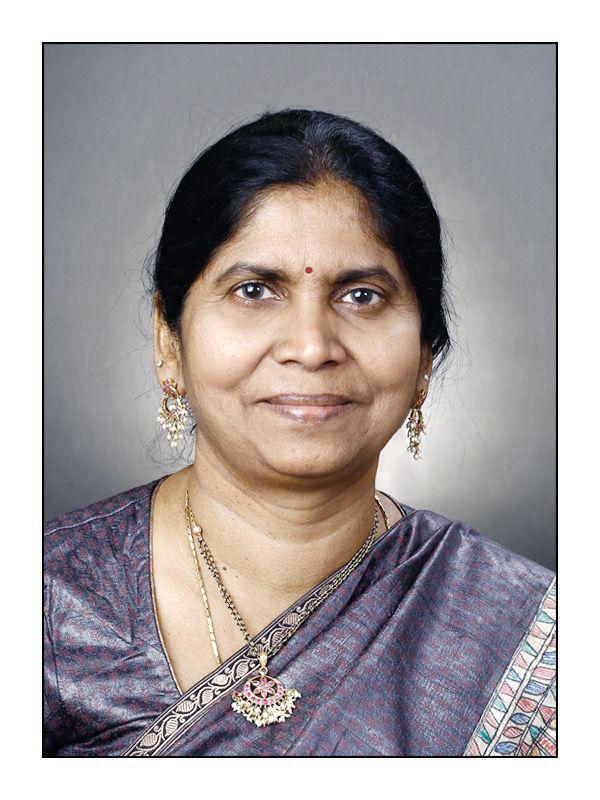 Name : Dr Velivelli Vijaya Lakshmi
Designation : Associate Dean
Discipline / Department : Resource Management and Consumer Sciences
Highest Qualification : Ph.D
Other Degrees : M.A. Psychology from Acharya Nagarjuna University, Guntur, A.P., 2007
Areas of Specialization : Energy & environmental issues, colour & lighting in interiors, occupational health hazards and ergonomic studies
Research Interests/Projects : Renewable energy technologies and mitigation of occupational health hazards and drudgery of women
Contact :8332970373
E-Mail :adccs@pjtau.edu.in
Awards: 11
Life member : 13 associations
Patents: 6
External examiner/board member: 9 SAUs, 6 Traditional Universities
Reviewer: 8 Journals
Number of Research Publications : Research articles: 126 Books: 17 Book chapters: 32 Popular articles: 17
1. Lakshmi, V.V. and Paul, M.M. 2018. Value education in educational institutions and role of teachers in promoting the concept. International Journal of Educational Science and Research, 8(4), 29-38 (cited by 90)
2. Lakshmi, V.V. and Paul, M.M. 2019.Socio-economic conditions of tribal communities of Telangana and AP- a review. Acta Scientific Agriculture, 3(8), 104-109 (cited by 27)
3. Lakshmi, V.V. and Paul, M.M. 2017. Consumption pattern and financial management among college students. Int. J. Bus. Gen. Manag, 8, 63-70 (cited by 10)
4 . Lakshmi, V.V., Manasa, T. and Pratyusha, M. 2021. Review on consumer awareness and health benefits about millets. The Pharma Innovation Journal, 10(6): 777-785 (cited by 9)
5 . Rani, U.V., Lakshmi, V.V., and Reddy, G.R. 2021Knowledge, attitude, practice and socio-economic factors influence on households’ waste management practices. The Pharma Innovation Journal, SP-10(5): 545-550, (cited by 7)
6. Lakshmi, V.V., Deepika, J. and Logeswari, S. 2017. Evaluation of Thoracic Kyphosis and Lumbar Lordosis Among VDT Workers and Kitchen Workers. International Journal of Educational Science and Research,7(5), 101-108, (cited by 6)
7. Lakshmi, V.V.2023. Psychological effects of colour. Journal of Biotechnology & Bioinformatics Research,5(2),1-2, (cited by 5)
8. Lakshmi, V.V. and Paul, M.M. 2018. Importance of assistive technologies and programmes for economic empowerment of disabled farmers– A review International Journal of Farm Sciences, 8(2), 37-42, (cited by 5)
9. Lakshmi, V.V. and Bindu, S.H.E. 2023. History of Interior Design. AATCC Review, 11(2)94-110 (cited by 4)
10.Rani, U.V., Lakshmi, V.V., Kumari, R.D., Reddy, G.R. and Meena, A. 2022. Households’ Waste Disposal Practices and Its Impact on Health. International Journal of Environment and Climate Change, 12(12), 252-260, (cited by 4)
Overview of the Undergraduate Program
- 4-year degree program with 167 credit hours of coursework.
- Includes 10 credits of MOOCs/online courses and 4 credits of non-gradial courses.
Common courses
Enable the students for better communication skills and Personality development as well as to have a broader view of agriculture and allied sectors.
Foundation & Common Courses
- Deeksharambh: 2-week Foundation Course in the 1st semester covering academic orientation, ethics, values, cultural heritage, and more.
- Includes multi-disciplinary, value-added, ability enhancement, and NSS/NCC courses.
Skill Enhancement Courses (SEC)
- Focus on hands-on skill development in Community Science during the 1st and 2nd years.
- 12 credit hours of SEC across 4 semesters (modules 1–4).
- Students choose skill modules from 5 domain areas after a common orientation.
- Flexibility to select modules based on interest or local needs.
Year-wise Structure
- Year 1: Basic & skill development courses.
- Year 2: Advanced skill modules + fundamental theory courses.
- Year 3: Core courses + 10–12 day study tour (2 non-gradial credits).
- Year 4: Specialization through 20-credit Electives + Student READY program in 8th semester (RAWE, internship, project, etc.).
Scope for online learning
- Up to 10 credits can be earned via MOOCs (SWAYAM, NPTEL, edX, Coursera, etc.).
- Courses can be from any discipline and will be recorded in Academic Bank of Credits (ABC).
- Separate certificates will be issued for these courses.
Overview of the Undergraduate Program
Student READY (Rural Entrepreneurship Awareness Development Yojana) programme in final year (8th Semester) includes, Rural Awareness Work Experience (RAWE) in villages, experiential learning, and internship/in-plant training in reputed institutions were being offered as a unique practical oriented professional course. The brief information about components of student READY Programme is as follows
RAWE
The Rural Awareness Work Experience (RAWE) helps the students primarily to understand the rural situations, status of homestead / agricultural technologies adopted by rural families, prioritize their problems and to develop skills and attitude of working with farm families for overall development in rural area.
Experiential Learning Programme
The motto of the Experiential Learning Programme in agriculture universities is to “Earn while Doing”. This approach emphasizes hands-on, practical experience as a key component of learning, allowing students to apply theoretical knowledge in real-world agricultural settings. College of Community Science has 4 established AELP units as given below.
- Health millet biscuits under Millet Processing and Incubation centre (MPIC).
- Value added textiles & Apparel, Eco Products including Eco Paints (EP), Ganesh Idol Painting under Natural Dye Processing and Incubation Centre (NDPIC).
- Development of Interior Decoration Accessories and Furnishings using Floral materials and other handicrafts under Floral Art Production Unit.
- Development of instructional material using photo editing software like Adobe Photoshop, CANVA and Adobe-in-design under Knowledge Material Production Unit.
Internship/Inplant Training
The programme provides an opportunity to develop insight into the practical application of academic knowledge, serves as the essential transition between formal education and professional practice. The internship is proposed to assist the students’ in obtaining a broad range of quality professional experience, aids in preparing and developing potentially employable graduates ready to serve the industry. The programme helps the students to develop their personality and capacity to adapt to, and handle, challenging situations in the real business world. Through the internship program, the students should be able to acquire communications skills, interpersonal skills, technical skills, teamwork skills, management skills and problem solving skills.
Infrastructure Facilities
College is having good infrastructure with 14 class rooms, 5 seminar halls, 29 well equipped laboratories, good library with 15000+ books, playground, gym, 2 examination halls, one indoor auditorium and one outdoor auditorium, one hostel with two buildings with a capacity of 120 inmates, part time medical doctor availability for students and staff, drinking water facility etc.
Apart from above, College has two incubation centres and one training centre as given below:
Centre for Advanced Faculty Training (CAFT)
The Centre of Advanced Faculty Training (CAFT)–Home Science at PJTSAU, Hyderabad, is the only centre in India dedicated in providing advanced knowledge and technical training in Home Science to faculty members of SAUs and ICAR institutions.
Natural Dye Processing and Incubation Centre (NDPIC)
Department of Apparel & Textiles, College of Community Science, PJTAU had established Natural Dye Processing and Incubation Center (NDPIC) with financial support from Telangana Pollution Control Board, Government of Telangana in the year 2016. NDPIC is pioneer in commercial production of wider range of GREEN technologies and sustainable products from different natural dye yielding plant sources grown in India. The products include biodegradable surface paints for Ganesh idols, fried clay products including terracotta, pots for plants, wood and bamboo, paper and mashed pulp products and Eco holi coloured powders.
Millet Processing & Incubation Center (MPIC):
Established in the year 2013 under RKVY for Nutri-Cereal processing and value addition for food and nutritional security of the society. It is focusing on:
- Technology development through reformulation of convenience foods with Nutri-Cereals, up scaling, branding and marketing
- Technology licensing to industries and entrepreneurs, providing incubation facilities
Supporting student research, capacity building to UG/Diploma students, field functionaries, farmers and self-help groups.
Placement Details
The College of Community Science has been nurturing skilled professionals since its inception, with many alumni successfully working in various government sector as scientists, assistant professors, child development project officers, extension officers, supervisors, civil servants and in private organizations as counsellors, dieticians, journalists, media designers, crèche, preschool, school and college teachers, interior decorators, fashion designers, event managers or establishing their own enterprises like clothing and food boutiques, food manufacturing units, interior design and decoration firms, day care and nursery schools.
Extracurricular Activities
Apart from academic activities, students are actively engaged through out the year in extra curricular activities like Intercollegiate and Inter university sports and cultural meets, rallies, marathons, self-defence classes, various state, national and international day celebrations, NSS activities and camps as and when proposed by Ministry of youth affairs and sports.