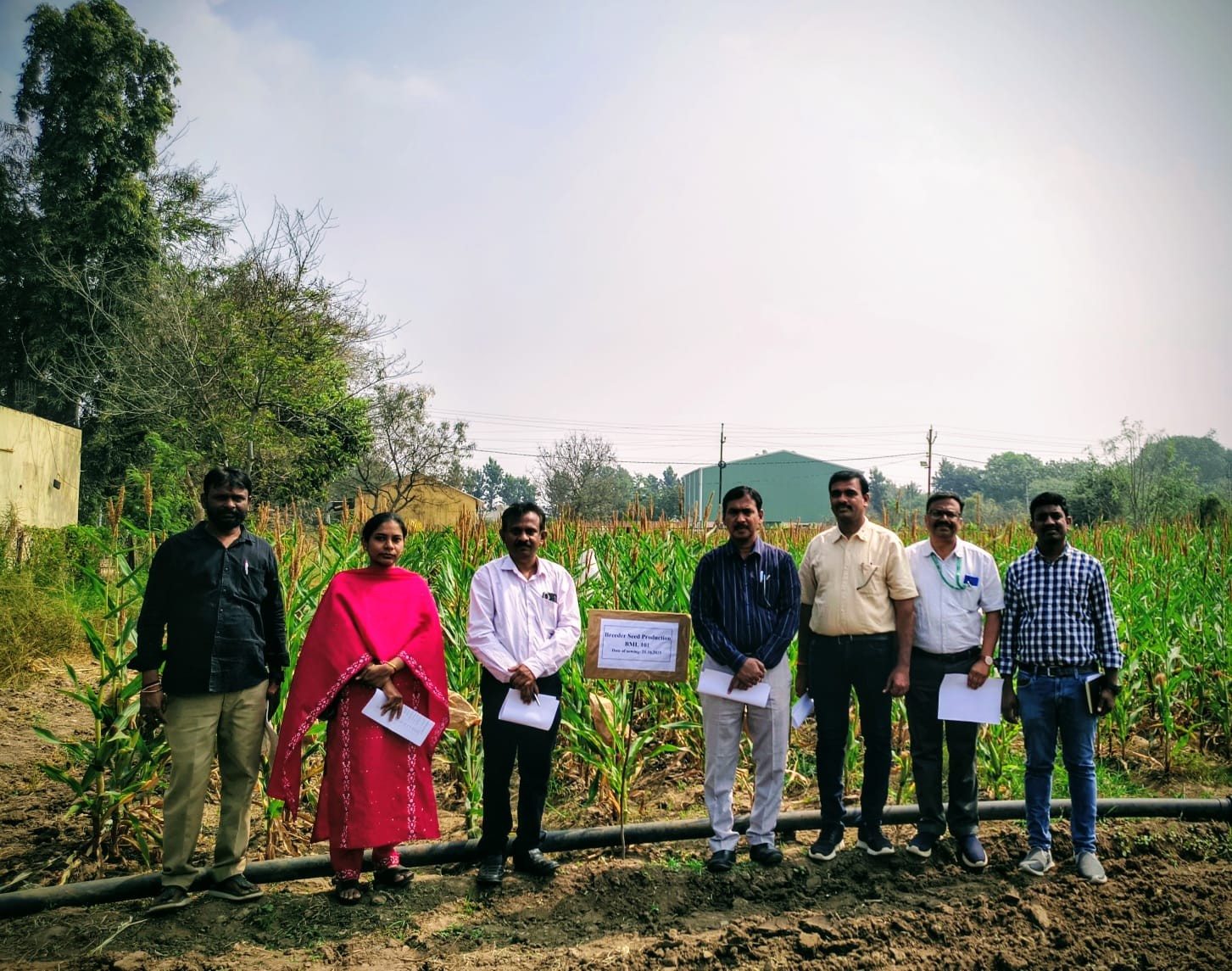
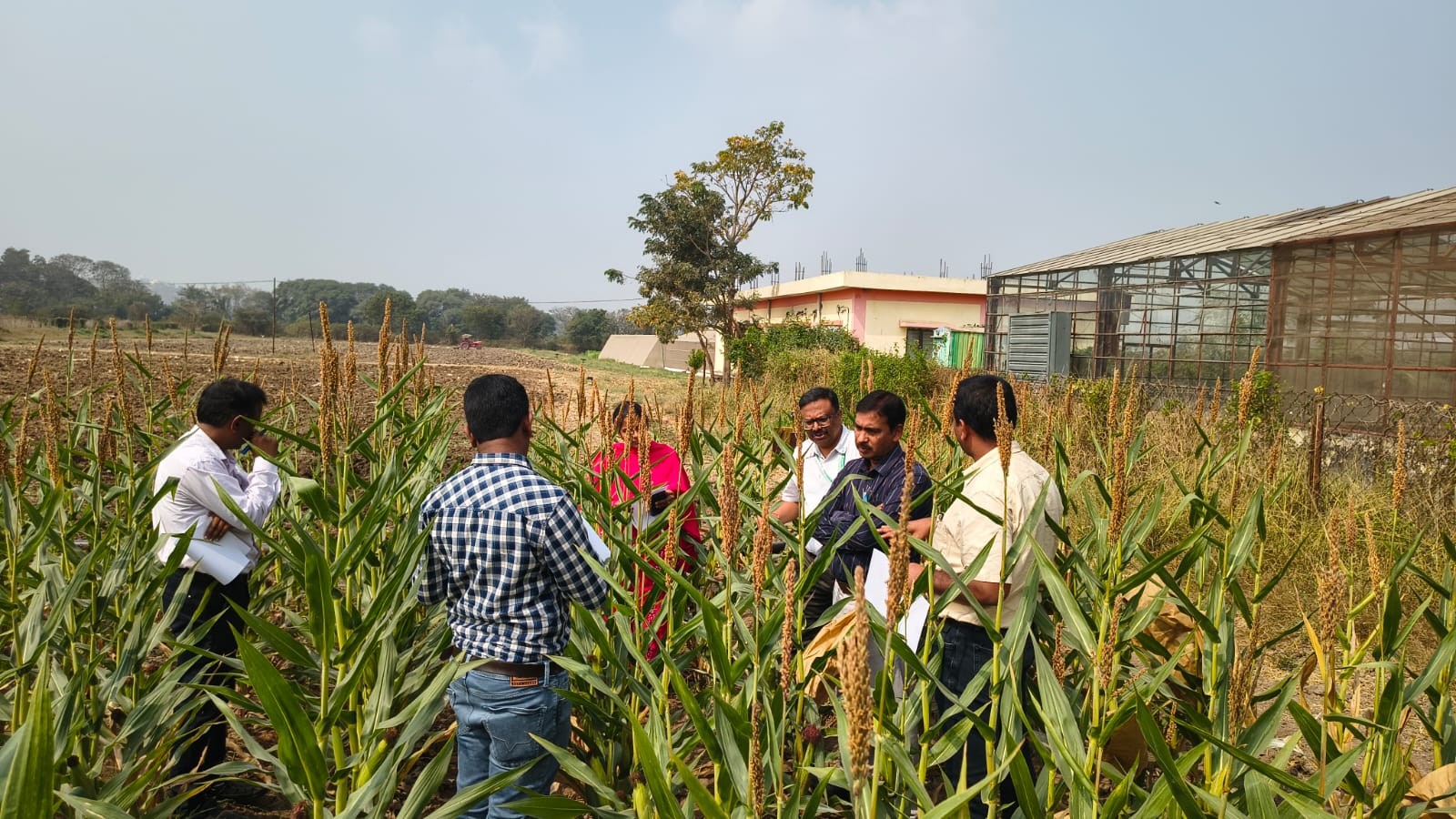
Dr. M V Nagesh Kumar, Director (Seeds), PJTAU visited Breeder seed production fields of Maize Research Unit, ARI, Rajendranagar on 30.01.2026.
Dr. M V Nagesh Kumar, Director (Seeds) , PJTAU visited the Maize Breeder seed production fields of BML 101 at Maize Research Unit, ARI, Rajendranagar on 30.01.2026 along with Dr. N. Sunil, Principal Scientist (Pl.Br) & Head, Winter nursery centre, ICAR- IIMR, Hyderabad, Dr. K. Sukumar, Principal Scientist (Pl.Br) , SRTC, Rajendranagar, Sri. M. Shivakumar, Assistant Director of Seed certification, TGSCOA, Hyderabad, Smt. Rubeena Afrin, Regional Manager, TGSDC, Hyderabad and Smt. Anjali, Manager (Production), National Seed Corporation, Secundrabad. During the field visit Dr. D. Bhadru, Principal Scientist (Maize & Millets), briefed the team on the breeder seed production programme and explained the morphological characteristics and distinguishing features of BML 101. The Team closely observed the crop stand, uniformity, flowering behaviour, and overall field condition and expressed satisfaction with the quality of breeder seed production being maintained at the Maize research unit. During the interaction, Dr. M. V. Nagesh Kumar, Director (Seeds) emphasized the high yield potential and wide adaptability of maize hybrids released by the Maize Research Unit i.e., DHM 206, DHM 182, DHM 211, DHM 213, and DHM 218. He highlighted the growing demand for high-performing maize hybrids and stressed the need to undertake large-scale seed production of these promising hybrids to ensure timely availability of quality seed to farmers and to support their commercialization across different states. Dr. N. Sunil highlighted the consistent and superior yield performance of DHM 206 and DHM 182 across multiple agro-climatic zones of India, underlining their potential for wider adoption. The representatives from seed development and seed certification agencies also shared their perspectives on seed quality assurance, production planning, and scaling up of breeder and hybrid seed production. The visit provided an opportunity for meaningful interaction among scientists, seed production agencies, and certification authorities, and reinforced the importance of coordinated efforts for strengthening maize seed production and dissemination.